Night Shift Utility Budget: Plan for Bills You Pay by Day

Quick answer: Track one month of real usage and pull 12 months of bills. Budget each month at your highest bill and save the difference in low months. Check whether a time-of-use plan fits your sleep and work hours before switching, and cut daytime sleep costs like cooling the whole house.↗ Share on X
To budget for utilities on night shifts, start by tracking your real usage for one full billing cycle, because night workers use power at different hours than most households. Then check whether your electric company offers a time-of-use plan, which charges less for power used at off-peak times, often overnight. Next, set a fixed monthly utility amount based on your highest recent bill, not your average, and move it into a separate account on payday. Finally, cut the biggest daytime costs: cooling or heating an empty-feeling home while you sleep, blackout-room comfort, and appliances running at peak hours.
Below is a step-by-step plan, a sample budget table, and the mistakes that make night-shift utility bills jump.
Why are utility bills different for night-shift workers?
 Work From Home Utility Budget: Plan for Higher Bills →
 Utility Bills Spike in Winter? Build a 12-Month Budget →
 Irregular Income? Budget Off Your Lowest Month, Not Average →
Most homes use the most energy in the evening, when people get home, cook, and watch TV. Night-shift workers flip that pattern. You may be:
- sleeping during the hottest part of the day, so the air conditioner runs hard while you're home;
- running fans, white-noise machines, and blackout setups for daytime sleep;
- cooking and doing laundry at odd hours, sometimes during peak price windows;
- leaving the house empty overnight, when many people would be using heat.
This is not good or bad by itself. It just means generic budgeting advice like "turn off lights in the evening" may not fit your life. Your plan has to match your actual schedule.
Clear money tips in your inbox. No hype.
Step 1: How do you find out what you really use?
Affiliate link. We may earn a commission on purchases, at no extra cost to you.
This content is informational and is not investment advice or financial consulting.
You can't budget well for a cost you've only guessed. Spend one billing cycle (about 30 days) gathering facts.
1. Pull your last 12 months of bills. Most utility companies show these in your online account. Write down the amount for electric, gas, water, and internet for each month.
2. Find your highest month and lowest month. For many people, summer cooling or winter heating creates the peak.
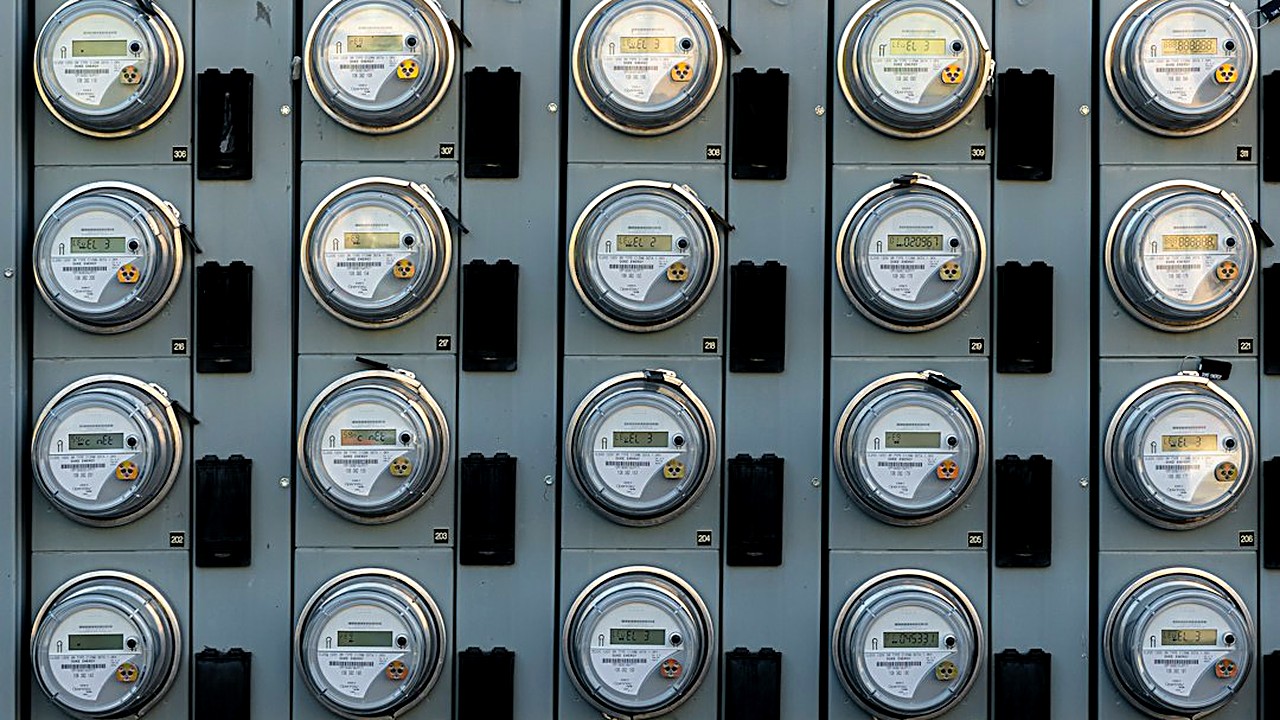
3. Check for an hourly usage chart. Many electric companies with smart meters let you see usage by hour in your online account or app. Look at when your usage spikes.
4. Note your work schedule next to it. If your spike is from 10 a.m. to 4 p.m., that's your sleep time. That tells you where the money goes.
If your company doesn't show hourly data, you can still learn a lot by checking the meter yourself before bed and after you wake up for a week.
Step 2: Is a time-of-use plan right for you?
 Sinking Funds: How to Pay for Seasonal Bills Without Panic →
 Winter Utility Spikes: A Sinking Fund Plan That Works →
 Annual Renewals Wrecking Your Budget? Use a Sinking Fund →
Some electric companies offer time-of-use (TOU) rates. With these plans, the price per kilowatt-hour (the unit you're billed for) changes by time of day. Peak hours, often late afternoon and early evening, cost more. Off-peak hours, often overnight, cost less.
This can help night workers, or it can hurt. It depends on when your usage happens.
| Your pattern | TOU plan might... | Why |
|---|---|---|
| You sleep days, AC runs mostly 10 a.m. to 3 p.m. | Help or be neutral | Many plans' peak starts later in the afternoon |
| You get home and cook or do laundry around 6 a.m. | Help | Early morning is often off-peak |
| You run AC hard from 3 p.m. to 8 p.m. before your shift | Hurt | That window is often the most expensive |
| Your home is mostly empty overnight | Little effect | Low usage at the cheap hours |
Peak hours are different for every company and sometimes change by season. Call your utility or read its rate page before switching. Ask three questions:
1. What are the exact peak and off-peak hours, in summer and in winter?
2. Can you estimate what my last 12 months would have cost on this plan?
3. Is there a penalty or waiting period if I switch back?
Don't switch just because someone said TOU is "cheaper." For some schedules it costs more.
Step 3: How much should you set aside each month?
Utility bills go up and down by season. The goal is to never be surprised. There are two common ways to handle this.
Option A: Budget at your highest month
Take your highest bill from the last year and set that as your monthly utility budget. In lower months, the extra money stays in a separate account as a cushion for the expensive months.
Option B: Ask about budget billing
Many utility companies offer budget billing (also called level pay). They average your yearly cost and charge you the same amount every month. Once a year, they adjust it up or down based on what you really used.
Budget billing makes planning easier, but it does not lower your total cost. And if you use more than expected, your payment may rise at the yearly review.
A sample night-shift utility budget
Here is an example of how one person could lay it out. Your numbers will be different.
| Utility | Lowest month | Highest month | Monthly amount to set aside |
|---|---|---|---|
| Electric | $85 | $190 | $190 |
| Gas | $25 | $110 | $110 |
| Water and sewer | $45 | $60 | $60 |
| Internet | $60 | $60 | $60 |
| Total | $215 | $420 | $420 |
In low months, this person sets aside $420 but only pays around $215. The difference builds up for the high months. If $420 is too much for your income right now, use the midpoint and add a little each month to a cushion.
Step 4: How do you lower daytime sleep costs?
This is where night workers can save the most, because it's the part of your life other budgets ignore.
Cool one room, not the whole house
If you only sleep in one bedroom, you may not need to cool every room to the same temperature. Options:
- Close vents and doors in rooms you're not using (check with your landlord or an HVAC technician first, since closing too many vents can strain some systems).
- Use a fan in the bedroom so you can set the thermostat a few degrees higher.
- Use a programmable or smart thermostat set to your real schedule: cooler while you sleep, warmer while you're at work.
Block the sun's heat, not just its light
Blackout curtains help you sleep, and thermal blackout curtains also block heat from windows. A bedroom that faces the afternoon sun can get much hotter without them. This is one of the cheaper upgrades with a real effect.
Run big appliances at off-peak times
If you're on a TOU plan, use the dishwasher, washer, and dryer during off-peak hours. Many machines have a delay-start button. You can load them before your shift and set them to run overnight.
Cut "phantom" power
Electronics that stay plugged in use a small amount of power all day. Put your TV, game console, and chargers on a power strip and switch it off when you leave for work.
Step 5: What about water and internet?
These are usually smaller, but still worth checking.
- Water: Check for a running toilet. Put a few drops of food coloring in the tank. If color shows up in the bowl within about 15 minutes without flushing, you have a leak. A flapper replacement is usually a cheap fix.
- Hot water: If you shower after your shift, your water heater may be heating water all day for no one. Some people lower the water heater temperature a little. Follow the manufacturer's instructions and safety guidance.
- Internet: Call your provider once a year and ask if there's a cheaper plan or a current promotion. If you mostly stream on one device, you may not need the fastest speed.
Which mistakes make night-shift utility bills jump?
1. Budgeting with your average bill. The average hides the summer or winter spike. Use your highest month.
2. Switching to a time-of-use plan without checking peak hours. Running AC during peak can raise your bill.
3. Cooling the whole house for daytime sleep. Focus on the bedroom.
4. Paying bills from your everyday account. The money gets spent on other things. A separate account keeps it safe.
5. Ignoring the yearly budget-billing review. Check the new amount when it arrives.
When should you get help?
If you're already behind on a utility bill, call the company before a shut-off notice. Many companies have payment plans or hardship programs. You can also call 211 in most of the U.S. to ask about local programs that help with energy bills, such as LIHEAP (the federal Low Income Home Energy Assistance Program). Rules and availability vary by state.
If money is tight overall, a nonprofit credit counselor can help you build a full budget. This article is general information, not personal financial advice.
What should you do this week?
Log in to your electric company's website today and download your last 12 months of bills. Write down your highest month for each utility and add them up. That total is your monthly utility number. Then open a separate savings account, or a "bucket" inside your bank app, and set up an automatic transfer for that amount on your next payday. Finally, look for the hourly usage chart in your account. If you find it, compare it with your sleep hours, and call to ask whether a time-of-use plan would have saved you money last year.
FAQ
Is a time-of-use electric plan good for night-shift workers?
It depends on when you use power. It can help if your heavy use falls in off-peak hours, but it can cost more if you run AC during peak hours. Ask your utility to estimate last year's cost on the plan before switching.
How much should I budget for utilities each month?
A safe method is to set aside your highest monthly bill from the last year and keep the extra from cheaper months as a cushion. Budget billing from your utility can also even out payments, but it does not lower the total.
Where can I get help if I'm behind on utility bills?
Call the utility before a shut-off notice to ask about payment plans. In most of the U.S. you can call 211 to ask about local help such as LIHEAP. Rules vary by state.
Clear money tips in your inbox. No hype.
Educational content, not personalized financial advice. Sources cited where applicable.