Rebuilding Credit After a Debt Settlement: First 12 Months

Quick answer: Your score starts recovering once the settled account reports a zero balance and you begin adding fresh on-time payments somewhere else. The settlement itself does not lift the score, and the old late payments stay on your report for about seven years from the first missed payment.↗ Share on X
Your score starts moving again once two things happen: the settled account stops showing a past-due balance, and you build a short stretch of fresh on-time payments on some other account. That second part is the one most people skip. Settling the old debt stops the bleeding, but nothing rebuilds a score except new positive payment history, month after month.
This article is general information, not financial or legal advice. If you are dealing with several collection accounts, a lawsuit, or wage garnishment, talk to a nonprofit credit counselor or a consumer attorney in your state before you act.
What does a settlement do to your credit report?
 How to Get Out of Debt: A 6-Step Plan for a Tight Budget →
 How to Get Out of Debt: A 7-Step Plan for Real Beginners →
 How to Get Out of Debt: A 7-Step Plan for Beginners →
When you settle, the creditor agrees to take less than the full balance and close the account. On your report, the account usually ends up marked something like "settled for less than full balance" or "paid, settled." The balance goes to zero.
Two things matter here:
- The late payments that came before the settlement stay. Those are what dragged your score down in the first place, and they don't disappear because you settled.
- The account keeps reporting for about seven years from the date of the first missed payment that was never caught up. That date is called the original delinquency date. Settling does not restart that clock, and it does not erase it either.
So the settlement itself is not what lifts the score. What lifts the score is that the balance is no longer growing, no new lates are piling on, and you start adding good months somewhere else.
Clear money tips in your inbox. No hype.
Which parts of your score can you actually move?
Affiliate link. We may earn a commission on purchases, at no extra cost to you.
This content is informational and is not investment advice or financial consulting.
FICO publishes the general weight of each category. Knowing the weights tells you where to put your effort.
| What it looks at | Rough weight | Can you move it fast? |
|---|---|---|
| Payment history | 35% | Only forward — one month at a time |
| Amounts owed (utilization) | 30% | Yes, this is the fastest lever |
| Length of credit history | 15% | No — it only grows with time |
| New credit and inquiries | 10% | Yes, by applying less |
| Credit mix | 10% | Slowly, as accounts are added |
Read that table again and notice something: the two biggest pieces are payment history and how much of your available credit you are using. Between them they make up about two thirds of the score. Everything else is noise by comparison.
Step 1: get the settlement terms in writing
 5 Real Tips to Improve Your Credit Score Fast →
 5 Signs You're Trying to Improve Your Credit Score Wrong →
 5 Credit Score Mistakes That Quietly Keep Your Number Low →
Before you send a single dollar, get a letter from the creditor or collection agency stating the amount they will accept, the deadline, and that the account will be reported as settled and the balance set to zero. Email counts. A phone promise does not.
Keep that letter. Also keep the proof of payment — the canceled check, the bank transfer confirmation, the card receipt. If the account later shows a balance that should be zero, that letter is the entire basis of your dispute.
Step 2: check what the three bureaus are showing
About 45 to 60 days after you pay, pull your reports from Equifax, Experian, and TransUnion. You can get free copies through AnnualCreditReport.com, the official site set up under federal law. Do not pay for this.
Look for four specific errors on the settled account:
1. A balance still showing when it should be zero.
2. The account still marked "open" instead of closed.
3. Late payments dated *after* the settlement date.
4. The same debt listed twice — once by the original creditor and once by the collector, both with a balance.
If you find any of these, dispute it in writing with the bureau, attach the settlement letter and the payment proof, and keep a copy of everything you send. The bureau generally has 30 days to investigate. Disputing something that is actually accurate will not help you, so focus on real errors.
Step 3: give the score something new to grade
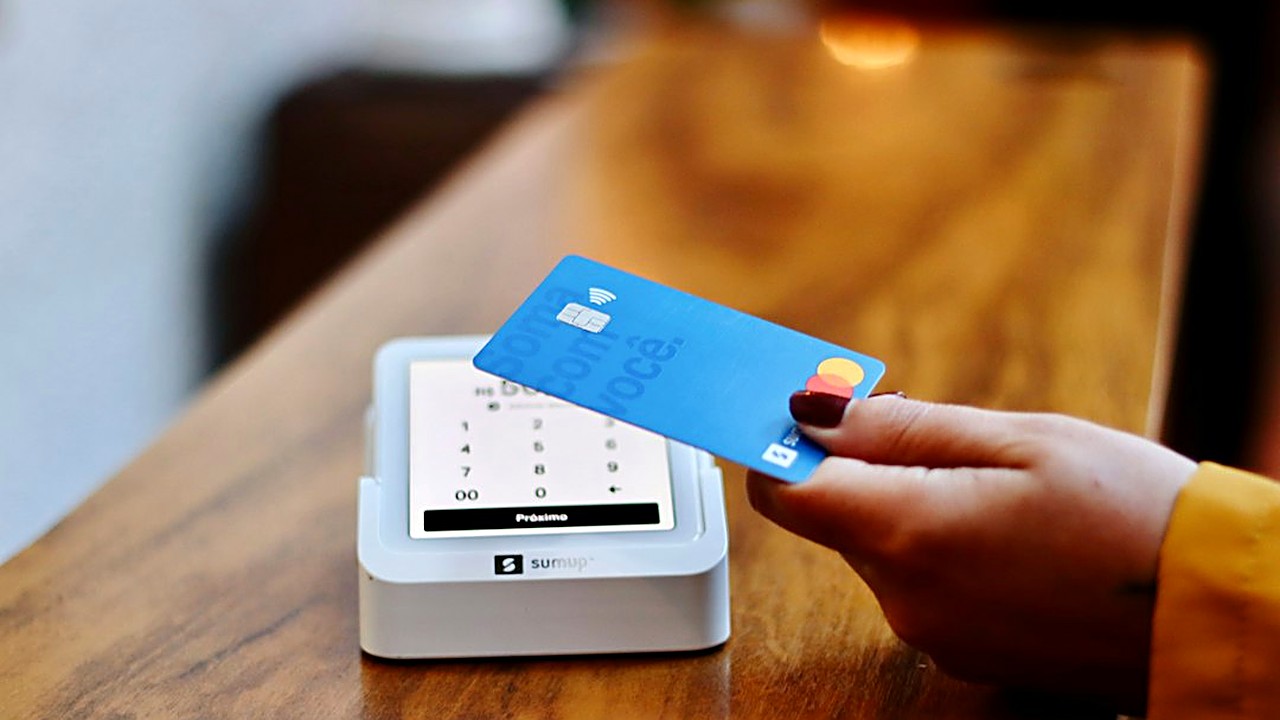
This is the part that does the work. You need at least one active account reporting on-time payments every single month. If you can't get approved for a normal card right now, use one of these three:
- A secured credit card. You put down a deposit, usually a few hundred dollars, and that becomes your limit. Confirm before applying that the issuer reports to all three bureaus — some small ones don't, and a card that doesn't report is useless for this purpose.
- A credit-builder loan. The money sits in a locked savings account while you make payments. At the end, you get the money. Many credit unions offer these with small monthly payments.
- Becoming an authorized user. A family member with a long, clean card history adds you to their account. You don't even need the physical card. Ask first whether the issuer reports authorized users to the bureaus, because not all do.
Set every one of these to autopay. One missed payment here undoes months of work.
What should the first year look like?
Here is a realistic sequence. Your own timing will differ depending on how deep the damage went.
| Stage | What you do | What to watch for |
|---|---|---|
| Months 1–2 | Get settlement letter, pay, save proof | Balance updating to zero |
| Months 2–3 | Pull all three reports, dispute errors | Bureau responses in writing |
| Months 3–4 | Open a secured card or builder loan | It reports to all three bureaus |
| Months 4–9 | Charge one small bill, pay in full | Utilization staying low |
| Months 9–12 | Check reports again, no new applications | Score trend, not single numbers |
Notice there is no promised score number attached to any stage. Anyone who tells you exactly how many points you will gain is selling something. The direction is what you control; the speed depends on how much negative history is sitting on your file.
Keep your utilization low, not just paid off
Utilization is the share of your available credit you are using. If your secured card has a $300 limit and your statement shows $270 owed, that is 90% used, and it reads badly even if you pay it in full the next week.
The number that gets reported is usually the balance on the statement closing date, not the balance after you pay. So the practical move is: put one small recurring charge on the card — a streaming subscription, a tank of gas — and pay it down before the statement closes. Low reported balance, perfect payment record, no interest.
And do not close old cards that still work. Closing a card removes its available credit from the math, which pushes your utilization up on everything else.
The tax bill people don't see coming
When a creditor forgives part of what you owed, the IRS may treat the forgiven amount as income to you. Creditors commonly report canceled debt of $600 or more on a Form 1099-C, and you may receive that form the following tax season.
There are exceptions — insolvency is a common one — but they have rules you have to document. Do not guess on this. If you settled a meaningful amount, talk to a tax professional before you file, and bring the settlement letter with you.
What keeps people stuck?
- Applying for lots of new credit at once. Each application leaves a mark and makes you look desperate to lenders.
- Paying a company to "remove accurate items." Accurate negative information cannot be legally removed. You can do everything a repair company does yourself, for free.
- Letting one small account go to collections during the rebuild. A single new collection resets your progress and adds another seven-year clock.
- Checking the score daily and panicking. Scores bounce month to month. Watch the six-month trend instead.
- Settling one card while three others go unpaid. Deal with the whole picture, not the loudest collector.
Your next step this week
Do these three things, in this order:
1. Find the settlement letter and the payment proof, and put both in one folder — paper or a folder on your phone. If you never got a letter, request one today in writing.
2. Pull one of your three reports from AnnualCreditReport.com and read only the settled account line. Confirm the balance says zero and the status says closed.
3. Call your local credit union and ask two questions: do you offer a secured card or a credit-builder loan, and do you report to all three bureaus?
If the answer to that last question is yes, open the smallest one you can afford and set it to autopay. That single account is what will be generating good months for you a year from now.
FAQ
Does settling a debt remove it from my credit report?
No. The account stays on your report for roughly seven years from the date of the first missed payment you never caught up on, and the late payments before the settlement stay too. What changes is the balance, which should update to zero, and the status, which should show the account as closed and settled.
Is a secured credit card worth it after a settlement?
It is often the most practical option, because approval does not depend on your score. Before you apply, confirm the issuer reports to all three bureaus, since a card that does not report will not build any history. Keep the reported balance low and set up autopay so you never miss a month.
Will I owe taxes on the amount that was forgiven?
You might. Creditors commonly report canceled debt of $600 or more to the IRS on a Form 1099-C, and that amount may count as income. There are exceptions, such as insolvency, but they have documentation rules. Take your settlement letter to a tax professional before you file.
Clear money tips in your inbox. No hype.
Educational content, not personalized financial advice. Sources cited where applicable.