Why Your Index Fund Balance Changes Every Day (Simple Math)

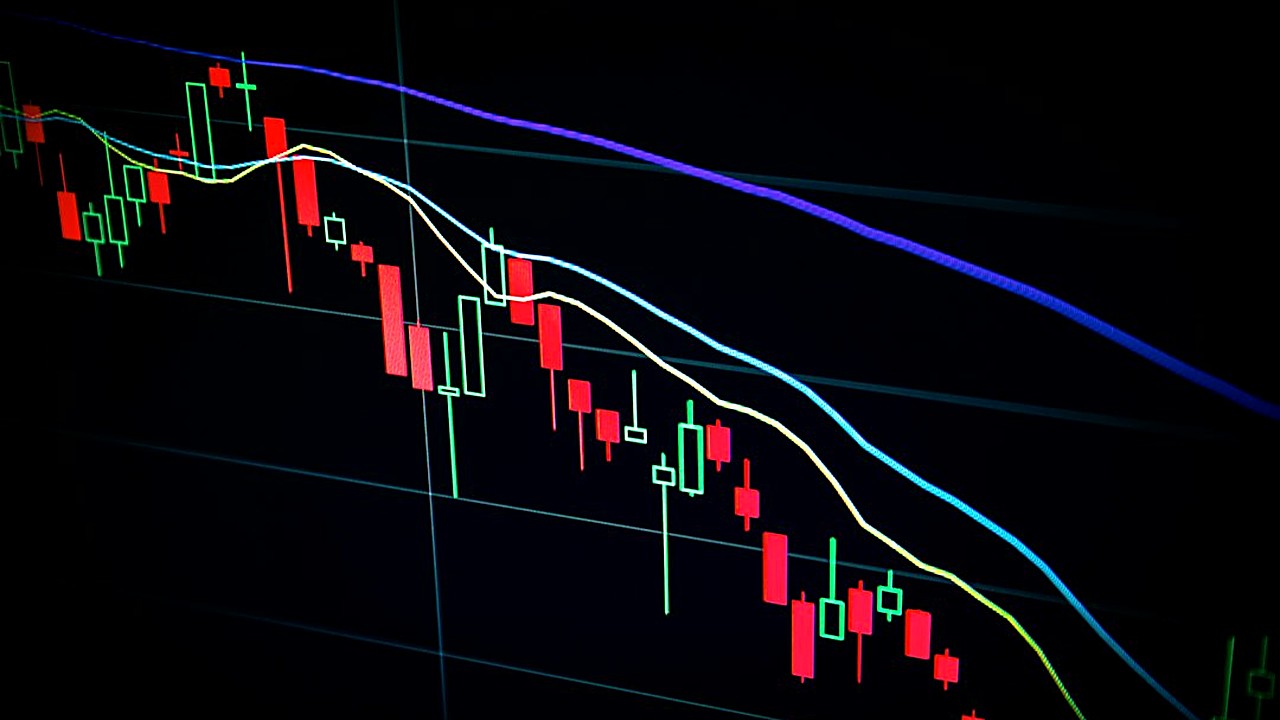
Quick answer: Your balance equals the number of fund shares you own multiplied by the fund's net asset value (NAV), which is recalculated every business day from the closing prices of all the stocks in the fund. Your share count does not change on its own. Only the price per share moves, so a drop is a price change on paper, not money leaving your account.↗ Share on X
Your index fund balance changes every day because the fund owns hundreds or thousands of stocks, and those stocks are bought and sold on an exchange every business day. At the end of each trading day, the fund adds up the closing price of every stock it holds, subtracts its small expenses, and divides by the number of shares investors own. That number is the net asset value, or NAV. Your balance is simply the number of fund shares you own multiplied by that day's NAV. When the stocks go up, the NAV goes up, and so does your balance. When they go down, your balance drops. Nothing was taken from you, and nothing was added. The price tag just changed.
What exactly is being recalculated each day?
 Roth or Traditional IRA for Index Funds: How to Decide →
 Checking Your Portfolio Daily? A 30-Day Plan to Stop →
 How to Reinvest Dividends Without Raising Taxable Income →
Think of an index fund as a basket. An S&P 500 index fund, for example, holds shares in about 500 large U.S. companies. The fund does not decide what to buy. It simply copies the list.
Every business day at 4:00 p.m. Eastern time, the stock market closes. The fund company then does a simple calculation:
1. Take the closing price of each stock in the basket.
2. Multiply by how many shares of that stock the fund owns.
3. Add it all up.
4. Subtract the fund's daily expenses (a tiny fraction of a percent).
5. Divide by the total number of fund shares held by all investors.
The result is the NAV per share. If the NAV was $100 yesterday and $101 today, every investor's balance went up 1%. If you own 50 shares, your balance went from $5,000 to $5,050.
Here is the key point: you still own 50 shares. The number of shares does not change on its own. Only the price per share moves.
Clear money tips in your inbox. No hype.
Why does the price move at all?
Affiliate link. We may earn a commission on purchases, at no extra cost to you.
This content is informational and is not investment advice or financial consulting.
Because people are constantly buying and selling the stocks inside the fund, and they change their minds about what each company is worth.
A company might report higher profits than expected, and buyers push the price up. Another company might announce a product delay, and sellers push the price down. Interest rate news, oil prices, elections, weather, and plain mood all nudge prices up and down. Multiply that across hundreds of companies and you get a NAV that is almost never the same two days in a row.
Most days, the moves are small. A typical day for a broad U.S. stock index fund is a change of less than 1% in either direction. A few times a year, a 2% or 3% day happens. Moves of 5% or more in a single day are rare but not unheard of.
A worked example with simple numbers
 How to Transfer Stocks to a New Brokerage Without Taxes →
 Expected Investment Returns: How to Estimate Them Honestly →
 Dividends in Your IRA or 401(k): Reinvest, Hold, or Take? →
Say you invest $10,000 in an index fund when the NAV is $50. You now own 200 shares.
| Day | NAV | Your shares | Your balance | Change from Day 0 |
|---|---|---|---|---|
| 0 | $50.00 | 200 | $10,000 | 0% |
| 1 | $50.40 | 200 | $10,080 | +0.8% |
| 2 | $49.75 | 200 | $9,950 | -0.5% |
| 3 | $49.10 | 200 | $9,820 | -1.8% |
| 4 | $50.25 | 200 | $10,050 | +0.5% |
| 5 | $51.00 | 200 | $10,200 | +2.0% |
Look at the "Your shares" column. It never moves. Every balance change comes from the NAV column alone. On Day 3, your balance was down $180, but you had not lost anything you could not get back. You only lose money when you sell at a lower NAV than you paid. Until then, the drop is on paper.
Now imagine the fund drops 10% in a bad month and your $10,000 becomes $9,000. If the fund recovers 10% the next month, you have $9,900, not $10,000. That is the math of percentages: a 10% loss needs an 11.1% gain to get back to even. This is one reason long holding periods matter.
Why the swings feel bigger as your balance grows
A 1% move on $1,000 is $10. A 1% move on $100,000 is $1,000. The percentage is identical, but the dollar amount is 100 times larger. New investors often feel fine with small balances and then get nervous when the same daily swings start showing up as hundreds or thousands of dollars.
The fix is to look at the percentage, not the dollars. If your fund moved 1.2% today, that is a normal day whether you have $500 or $500,000 in it.
Does the fund's daily swing match the index exactly?
Almost, but not to the penny. Two things cause small gaps:
- Expense ratio. This is the fund's yearly fee, taken out a little bit each day. A fund with a 0.03% expense ratio takes about $3 per year for every $10,000 you hold. Over a day, that is less than a penny per $10,000, so you will never see it move your balance, but over 30 years it adds up.
- Tracking error. The fund may hold slightly different amounts of each stock than the index, or hold a little cash for people who want to sell. This usually makes a difference of a few hundredths of a percent per year.
If your fund's yearly return is noticeably below the index it follows, by more than its expense ratio, something is off and worth asking the fund company about.
Why does my balance sometimes change when the market is closed?
Three common reasons:
1. Dividends. The companies in the fund pay out part of their profits, usually every three months. The fund collects those payments and either sends them to you as cash or uses them to buy more fund shares for you. If you chose to reinvest, you will see your share count go up slightly on dividend day, even though the NAV may drop by about the same amount.
2. Your own contributions. If you set up automatic investing from your paycheck, new money lands on a schedule and buys more shares.
3. Processing delay. Your account page may update the morning after the market closes, so a Tuesday move shows up Wednesday morning.
How often should you actually check your balance?
For a long-term goal like retirement, once a month is plenty. Once a quarter is fine too. Checking daily does not change the result, and it tends to make people more likely to sell during a dip and miss the recovery.
If you want a rule you can stick to, try this:
- Check once a month, on the same day, for five minutes.
- Note the balance and the percentage change in a simple spreadsheet.
- Do nothing unless your life situation changed, such as a new job, a new baby, or being within five years of needing the money.
What should you do when the balance drops?
For most people with a long time horizon, the honest answer is nothing. A drop in NAV means the same automatic contribution now buys more shares at a lower price. Over many years, buying through the dips is part of how index fund investors build wealth. Past results do not promise future ones, and no outcome is certain.
That said, there are times to act:
- You need the money within three to five years. Money for a house down payment or next year's tuition should not sit in a stock index fund, because a bad year could arrive right when you need it. A savings account, money market fund, or short-term bond fund is more suitable.
- The drop is keeping you up at night. That is a sign your mix of stocks and bonds is too aggressive for your comfort. Adjusting the mix is better than selling everything in a panic.
- You are not sure what you own. If you cannot explain in one sentence what index your fund follows and why you picked it, that is worth sorting out with a fee-only financial advisor before the next big swing, not during it.
A financial advisor who is a fiduciary is required to act in your interest. Ask any advisor directly whether they are a fiduciary before paying for advice. Nothing in this article is personal advice. Your situation, taxes, and goals are specific to you, and a licensed professional can look at all of them together.
Next step
Open your brokerage account and find two numbers: how many shares of your index fund you own, and the fund's current NAV. Multiply them. That product should match your balance. Then write the share count on a note. Next month, check again. If the share count only moved because of a dividend or your own deposit, you have just confirmed with your own eyes that daily swings are price changes, not money leaving your account.
FAQ
Do I lose money when my index fund balance goes down?
Not unless you sell. The drop reflects a lower price per share that day. You still own the same number of shares. The loss only becomes real if you sell at a lower NAV than you paid.
What is NAV in an index fund?
NAV stands for net asset value. It is the total value of everything the fund holds, minus expenses, divided by the number of fund shares. It is calculated once a day after the market closes at 4 p.m. Eastern.
How often should I check my index fund balance?
For a long-term goal, once a month or once a quarter is enough. Checking daily does not change the result and makes it more tempting to sell during a dip.
Clear money tips in your inbox. No hype.
Educational content, not personalized financial advice. Sources cited where applicable.