7 Credit Card Debt Mistakes That Keep You Stuck (and Fixes)


Quick answer: The biggest credit card debt mistakes are paying only the minimum, ignoring your interest rate, using the card while paying it off, and signing up for balance transfers or debt relief offers without reading the fees. Fix them by stopping new charges, paying extra on one card at a time, and asking for a lower rate.↗ Share on X
The mistakes that keep people stuck in credit card debt are usually simple: paying only the minimum, never looking at the interest rate, still using the card while trying to pay it off, and jumping into balance transfers or "debt relief" offers without reading the fees. The fix starts with three moves: stop adding new charges, put every extra dollar on one card at a time, and call your card company to ask for a lower rate.
This article is general education, not personal financial advice. Your situation depends on your income, your rates and your other debts. If you are behind on payments, getting collection calls or thinking about bankruptcy, talk to a nonprofit credit counselor or a licensed professional before you act.
Mistake 1: Why does paying only the minimum keep you stuck?
 Debt Consolidation Loans and Your Credit Score Over Time →
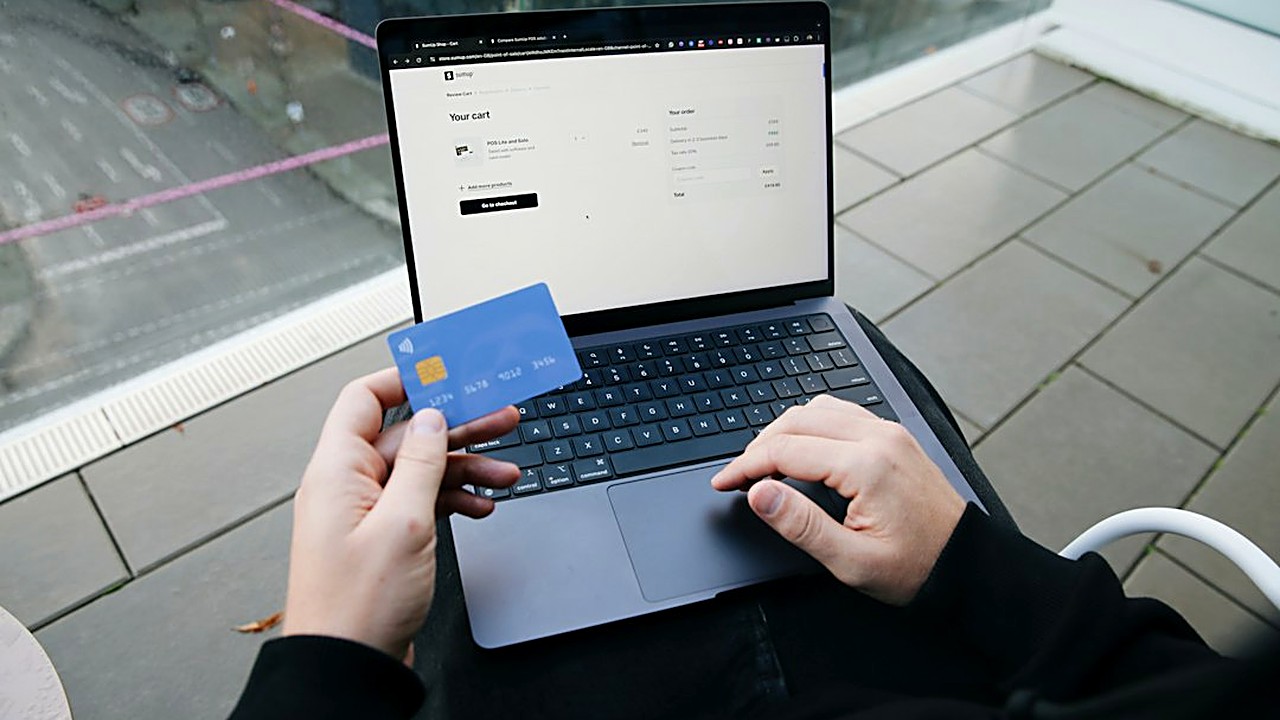 Getting Out of Debt: 8 Things to Check Before You Pay More →
 Rebuilding Credit After a Debt Settlement: First 12 Months →
The minimum payment is designed to keep your account in good standing, not to get you out of debt. Most of it goes to interest, and only a small slice lowers what you actually owe.
Your statement shows this. Look for a box called something like "Minimum Payment Warning." U.S. card issuers are required to show how long it would take to pay off your balance with minimum payments only, and how much you would pay in total. For many people, seeing that number is the wake-up call.
The fix: Pay more than the minimum on at least one card every month, even if it is only $25 or $50 extra. Set it as an automatic payment so you don't have to remember.
Clear money tips in your inbox. No hype.
Mistake 2: Do you know your actual interest rate?
Affiliate link. We may earn a commission on purchases, at no extra cost to you.
This content is informational and is not investment advice or financial consulting.
Many people know their balance but not their APR (annual percentage rate, the yearly cost of borrowing). Card rates are often much higher than car loans or mortgages, so a balance can grow fast even when you stop spending.
The fix: Write down every card in a simple table like this one:
| Card | Balance | APR | Minimum payment | Due date |
|---|---|---|---|---|
| Card A | $3,200 | 27% | $96 | 5th |
| Card B | $1,100 | 22% | $35 | 18th |
| Store card | $600 | 30% | $29 | 22nd |
You will find the APR on your statement or in your online account. Once it's in front of you, the plan becomes much clearer.
Mistake 3: Why can't you pay off a card you still use?
 How to Get Out of Debt: A 6-Step Plan for a Tight Budget →
 How to Get Out of Debt: A 7-Step Plan for Real Beginners →
 How to Get Out of Debt: A 7-Step Plan for Beginners →
Trying to pay down a card while still swiping it is like bailing water from a boat with a hole. New charges often cancel out your extra payments, and you feel like nothing is moving.
The fix:
1. Take the card out of your wallet and phone. Remove it from saved payment settings on shopping sites.
2. Use a debit card or cash for daily spending while you pay off debt.
3. Keep a small emergency fund, even $500 to $1,000, so a flat tire doesn't go straight back on the card.
Mistake 4: Are you spreading extra money across every card?
Paying a little extra on every card feels fair, but it slows you down. Focusing on one card at a time creates momentum and, depending on the method, saves more interest.
There are two popular methods:
| Method | How it works | Best for |
|---|---|---|
| Avalanche | Pay minimums on all cards, put all extra money on the card with the highest APR | Saving the most money on interest |
| Snowball | Pay minimums on all cards, put all extra money on the card with the smallest balance | People who need quick wins to stay motivated |
The fix: Pick one method and stick with it. When one card is paid off, take the full amount you were paying on it and add it to the next card. That growing payment is what makes the plan speed up.
Mistake 5: Is your balance transfer really cheaper?
A 0% balance transfer card can help. It lets you move debt to a new card with no interest for a set period, often 12 to 21 months. But there are traps:
- Transfer fee: usually 3% to 5% of the amount moved. On $5,000, that can be $150 to $250 up front.
- The rate jumps when the promo period ends, and any balance left starts collecting regular interest.
- New purchases on the card may not get the 0% rate.
- Late payment can end the promotional rate early on some cards.
The fix: Before applying, divide your balance (plus the fee) by the number of promo months. If you can't afford that monthly payment, the transfer may only delay the problem. And don't run the old card back up after moving the balance.
Mistake 6: Are you trusting "debt relief" ads?
Ads that promise to cut your debt in half or make it disappear deserve extra caution. Some debt settlement companies ask you to stop paying your cards while they negotiate. During that time, late fees pile up, your credit score can drop sharply, and you may be sued. Forgiven debt may also count as taxable income.
The fix:
- Start with a nonprofit credit counseling agency. Look for members of the National Foundation for Credit Counseling (NFCC). Many offer a free first session.
- Ask about a debt management plan. The agency may be able to get your card companies to lower your rates, and you make one monthly payment.
- Walk away from any company that charges big fees before doing anything, or that promises results nobody can promise.
Mistake 7: Have you ever asked for a lower rate?
Many people never call their card company. A short, polite call sometimes gets a lower APR, a waived late fee or a hardship program, especially if you have paid on time.
What to say: "Hi, I've been a customer for [number] years and I'm working on paying down my balance. Is there any way to lower my interest rate or enroll in a hardship program?"
If they say no, thank them and ask again in a few months. It costs you nothing to ask.
How do these fixes affect your credit score?
Paying down card balances usually helps your credit score over time, because it lowers your credit utilization, the share of your available credit that you are using. Many experts suggest keeping it under 30%, and lower is better.
A few things to keep in mind:
- Pay on time, every time. Payment history is one of the biggest factors in your score. Set up autopay for at least the minimum on every card.
- Think before closing old cards. Closing a paid-off card can raise your utilization. If it has no annual fee, keeping it open may help.
- Check your credit reports for free at AnnualCreditReport.com, the official site, and dispute any errors.
A simple one-page payoff plan
1. List every card with balance, APR, minimum and due date.
2. Set autopay for the minimum on all of them.
3. Choose avalanche or snowball and circle your target card.
4. Find a fixed extra amount you can pay each month, even if it's small.
5. Stop using the cards and build a small emergency fund.
6. Call each card company and ask for a lower rate.
7. When a card hits $0, roll its payment into the next one.
Your next step
Today, open your latest statement for each card and fill in the table from Mistake 2: balance, APR, minimum and due date. It takes about 15 minutes. Once the list is done, circle the one card you'll attack first and set up an extra automatic payment on it before the week ends. If you're already behind or the numbers don't add up, book a free session with an NFCC member agency before making any big move.
FAQ
Is it better to pay off the card with the highest interest or the lowest balance first?
Paying the highest interest rate first (the avalanche method) costs less in total. Paying the smallest balance first (the snowball method) gives faster wins, which helps some people stay motivated. Either works if you stick with it and stop adding new charges.
Will closing my credit card after paying it off hurt my credit score?
It can. Closing a card lowers your total available credit, which can raise your credit utilization, and it may shorten your credit history over time. If the card has no annual fee, many people keep it open and use it lightly.
Where can I get free help with credit card debt?
Nonprofit credit counseling agencies, such as members of the National Foundation for Credit Counseling (NFCC), offer free or low-cost budget reviews. Be careful with companies that charge large upfront fees or promise to erase your debt.
Clear money tips in your inbox. No hype.
Educational content, not personalized financial advice. Sources cited where applicable.