Credit Card Debt or House Fund? How to Split Your Money

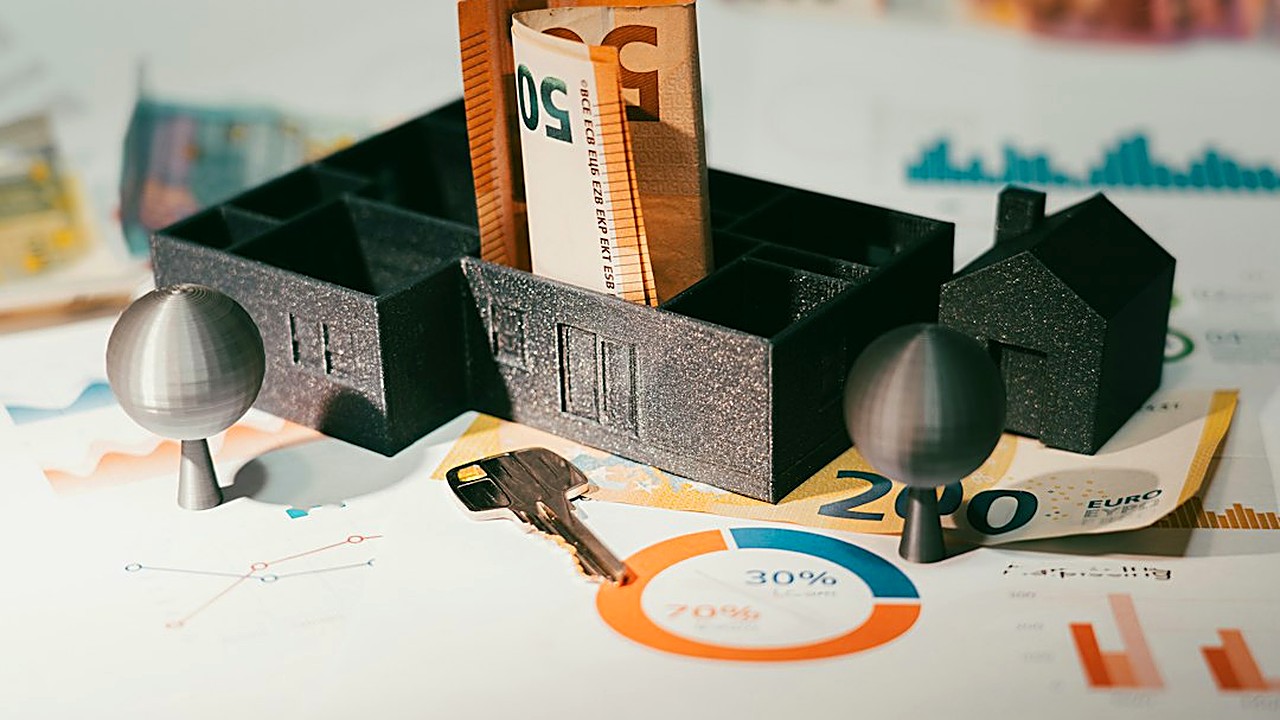
Quick answer: In most cases, pay off high-interest credit card debt first while keeping a small emergency fund, then build the down payment. Card interest usually costs far more than your savings earn, and lower balances raise your credit score and shrink your debt-to-income ratio, which can get you a better mortgage rate.↗ Share on X
If you have credit card debt and want to buy a house, the usual best order is simple: pay down the high-interest cards first, keep a small emergency cushion, and then build the down payment. Credit cards often charge 20% or more a year. A savings account pays far less. Every dollar sitting in savings while a card charges you interest is losing money. Paying the cards also lifts your credit score and lowers your monthly debt, and those two things decide your mortgage rate.
There are exceptions. If your debt is small, or your cards are at 0% for a while, you can do both at the same time. This article shows you how to decide and how to split each paycheck.
Why does card debt hurt your mortgage chances?
 How to Calculate Credit Card Interest Added Monthly →
 Credit Card Debt or Down Payment? How to Split Every Dollar →
 Pay Off Debt and Protect Your Credit Score: 7 Moves to Make →
Lenders look at three things before they lend you money for a house:
1. Your credit score. A big part of it is how much of your card limits you use. This is called "credit utilization." Using $4,500 of a $5,000 limit (90%) looks risky. Using $500 (10%) looks safe.
2. Your debt-to-income ratio (DTI). This is your monthly debt payments divided by your monthly income before taxes. Card minimum payments count. Many lenders want this number to stay at or below about 43% after you add the new house payment, and lower is better.
3. Your cash. You need money for the down payment, closing costs and some left over after closing.
Credit card debt hits all three at once. It lowers your score, raises your DTI, and eats the cash you are trying to save.
Clear money tips in your inbox. No hype.
What does the math look like with real numbers?
Affiliate link. We may earn a commission on purchases, at no extra cost to you.
This content is informational and is not investment advice or financial consulting.
Say you have $8,000 on cards at 24% a year, and $8,000 in a savings account that earns 4%.
| Keep both as they are | Use savings to pay cards | |
|---|---|---|
| Interest you pay on cards in one year | about $1,900 | $0 |
| Interest you earn on savings in one year | about $320 | $0 |
| Net result for the year | you lose about $1,580 | you lose $0 |
| Monthly card minimums counted in your DTI | yes | no |
These are rough numbers and real interest compounds monthly, but the lesson holds: the card wins by a wide margin. The money you were sending to the card company can now go straight back into your house fund.
Which situation are you in?
 How to Manage Credit Card Debt After a Pay Cut →
 Authorized User on a Credit Card: Score Help or Debt Trap? →
 Credit Card Debt and a Mortgage Application: What to Do →
Find the line that sounds most like you.
| Your situation | What usually makes sense |
|---|---|
| Cards above 15% interest, balance over a few hundred dollars | Pay cards first, keep a small cushion |
| Cards at 0% promo rate for 12+ more months | Pay the minimum plus a fixed amount, save the rest |
| Small balance you pay off every month | No change, keep saving |
| Debt larger than half your yearly income | Talk to a nonprofit credit counselor before anything else |
| Planning to buy in the next 3 months | Pay balances down to under 10% of each limit, then stop opening new accounts |
How do you split each paycheck?
Here is a plan you can start this week.
1. List every card. Write the balance, the interest rate (APR) and the minimum payment. You can find all three on your statement or in your card app.
2. Set a starter cushion. Keep $1,000, or one month of basic bills, in savings. This stops a flat tire from going back on the card.
3. Pay every minimum on time. One late payment can hurt your score more than a high balance does. Turn on autopay for the minimum.
4. Pick a target card. Put every extra dollar on the card with the highest interest rate. This is called the "avalanche" method. If you need quick wins to stay motivated, pay the smallest balance first instead (the "snowball" method). Both work if you stick with them.
5. Choose a split. A common starting point is 80% of your extra money to the cards and 20% to the house fund. When the last card is paid, switch to 100% house fund.
6. Roll the payment forward. When one card hits zero, add its old payment to the next card. Your payment grows without you finding new money.
7. Check your progress once a month. Look at your balances and your score. Many banks and card apps show a free score.
A simple example
Maria has $600 a month left after bills. She owes $6,000 across two cards at 22% and 26%.
- $480 goes to the 26% card (plus minimums on both)
- $120 goes to her house fund
- When the 26% card is gone, its payment moves to the 22% card
- When both are paid, all $600 plus the old minimums goes to the house fund
She does not stop saving completely, and she does not let the cards keep growing.
Should you use savings or a transfer card?
You have three common tools. Each one has a catch.
- Using part of your savings. Fast and free. The risk is having no cushion. Keep at least your starter emergency fund.
- A 0% balance transfer card. You move the debt to a new card with no interest for a set time. There is usually a transfer fee, often 3% to 5% of the amount. The new account can lower your score for a short time. Do this early, not in the months right before you apply for a mortgage.
- A personal loan to combine cards. One fixed payment, often at a lower rate than cards. It still counts in your DTI, and it is a new account on your report. Compare the total cost, not just the monthly payment.
Do not borrow from your 401(k) or take a cash advance to pay cards without talking to a professional first. The fees, taxes and lost growth can cost more than the card debt.
How much should you save for the down payment?
You may need less than 20%. Some loan types allow a much smaller down payment:
- Some conventional loans allow as little as 3% down for qualified buyers.
- FHA loans allow 3.5% down with a credit score of 580 or higher.
- VA and USDA loans can allow zero down for people who qualify.
A smaller down payment usually means a monthly mortgage insurance fee. Still, it can mean buying sooner. The key point: a better credit score can save you more over the life of the loan than a slightly bigger down payment. That is another reason to clear the cards first.
Do not forget closing costs. They are separate from the down payment. Ask a lender for a written Loan Estimate so you know the real number for your area.
What should you avoid in the months before you apply?
- Do not close old cards after you pay them off. Closing them lowers your total limit and can raise your utilization. Keep them open and use one for a small bill you pay in full.
- Do not open new credit like a car loan or store card.
- Do not move large sums of cash around without a paper trail. Lenders ask where big deposits came from.
- Do not miss a single payment. Set reminders and autopay.
- Do not max out a card on furniture before closing. Lenders often check your credit again right before the loan closes.
When should you get professional help?
This article gives general information, not personal financial advice. Your best plan depends on your income, your job, your local home prices and your full credit report. Talk to a professional if:
- your card payments take more than a fifth of your take-home pay
- you are using one card to pay another
- you have missed payments or have accounts in collections
- you are not sure which loan type fits you
Good places to start are a nonprofit credit counseling agency (look for one approved by the NFCC) and a HUD-approved housing counselor. Many offer free or low-cost help, including first-time buyer classes. A mortgage lender can also do a free pre-qualification and tell you what score and DTI you need.
Your next step today
Open your card apps and write down three numbers for each card: balance, interest rate and minimum payment. Pick the card with the highest rate. Set up autopay for every minimum, then schedule one extra payment to that target card this week. Finally, open a separate savings account named "House" and set up an automatic transfer of even $25 a payday. You have now started on both goals in the right order.
FAQ
Should I use my down payment savings to pay off credit cards?
Often yes, if the cards charge high interest and you keep at least one month of expenses as a cushion. Moving savings to the cards stops the interest right away. Then rebuild the house fund from the money you no longer spend on card payments.
Will paying off my credit cards raise my score fast?
Lower balances usually show up when your card company reports to the credit bureaus, often once a month. Many people see a change within one or two billing cycles, but the exact amount depends on your full credit file.
Can I buy a house while I still have some credit card debt?
Yes. Lenders do not require zero debt. They look at your score, your debt-to-income ratio and your cash for closing. A small balance you pay on time is far less of a problem than maxed-out cards.
Clear money tips in your inbox. No hype.
Educational content, not personalized financial advice. Sources cited where applicable.