Total Loss Payout: How Adjusters Set Your Car's Cash Value


Quick answer: Actual cash value (ACV) is what your car was worth on the open market right before the crash. Adjusters usually get it from a valuation report that compares your car to similar cars for sale near you, then adjust for mileage, options and condition. You can ask for that report and push back with your own comparable listings if the number looks low.↗ Share on X
Actual cash value (ACV) is what your car was worth on the open market the moment before the crash — not what you paid for it and not what a new one costs. To find it, most adjusters run your car through a valuation report that looks at similar cars recently sold or listed for sale near you, then adjusts the price up or down for mileage, options and condition. Your payout is usually that ACV, plus any taxes and fees your state or policy requires, minus your deductible. If the number looks low, you have the right to ask for the report, check its math and push back with your own evidence.
Here is how the process works, step by step, and what you can do about it.
When is a car declared a total loss?
 Not at Fault in a Crash? Who Pays Your Insurance Deductible →
 Missed a Life Insurance Payment? What the Grace Period Means →
 Beneficiary Form vs. Will: Who Really Gets Your Payout? →
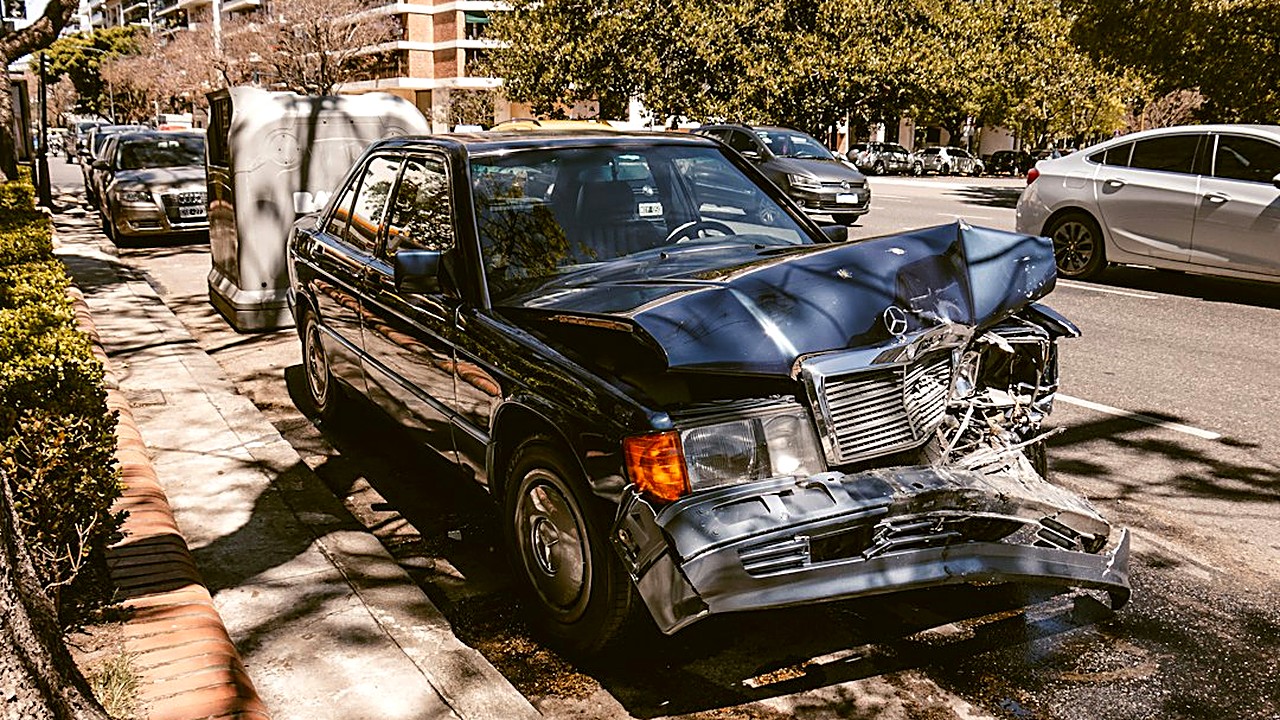
A car is "totaled" when fixing it doesn't make financial sense. Insurers compare three numbers:
- Repair cost — what the body shop estimates
- Actual cash value — what the car was worth before the crash
- Salvage value — what the wrecked car can be sold for at auction
Many states use a fixed percentage: if repairs cost more than a set share of the car's value, it must be declared a total loss. Other states use a total loss formula: if repair cost plus salvage value is more than the ACV, the car is totaled. Your state's department of insurance website explains which rule applies where you live.
A car can also be totaled for reasons other than cost, such as flood damage or a frame that can't be safely straightened.
Clear money tips in your inbox. No hype.
How does the adjuster figure out actual cash value?
Affiliate link. We may earn a commission on purchases, at no extra cost to you.
This content is informational and is not investment advice or financial consulting.
Most insurers don't guess. They use valuation software from outside companies (names you may see on your report include CCC, Mitchell or Audatex). The process usually follows these steps:
1. Identify your exact car. Year, make, model, trim level, engine, drivetrain and factory options, usually pulled from your VIN.
2. Find comparable vehicles ("comps"). The report looks for the same or very similar cars sold or listed for sale within a certain distance of your home.
3. Adjust each comp to match your car. If a comp has 20,000 more miles, its price goes up to match your lower mileage. If it lacks your sunroof, its price goes up for that too.
4. Apply a condition rating. The adjuster rates your car's condition before the crash — paint, interior, tires, prior damage. A lower rating means a deduction.
5. Average the adjusted comps to reach a base value, then add or subtract for condition and any special items.
What factors raise or lower your car's value?
 Missed a Life Insurance Payment? What Happens Day by Day →
 Insurance Changes to Make After Marriage, a Baby or a Move →
 Insurance Deductible: Per Claim or Per Year? It Depends →
| Factor | How it affects ACV | What to check on your report |
|---|---|---|
| Mileage | Lower miles = higher value | Is your odometer reading correct? |
| Trim level | Higher trims are worth more | Did they list the base model instead of yours? |
| Factory options | Navigation, sunroof, tow package, etc. add value | Are all your options listed? |
| Condition before the crash | Wear, old dents, stains reduce value | Is the condition rating fair? Do you have photos? |
| Recent upgrades | New tires, new brakes sometimes add a small amount | Did you send receipts? |
| Prior accident history | Can lower value | Was an old accident counted correctly? |
| Local market | Prices differ by region | Are the comps really near you? |
Aftermarket add-ons (custom wheels, lift kits, stereo systems) are often not included unless you bought extra coverage for them. Check your policy.
What does a total loss payout look like? A worked example
Let's say your car's valuation report lands at $14,200.
| Item | Amount |
|---|---|
| Actual cash value | $14,200 |
| + Sales tax and title fees (if your state/policy includes them) | + $950 |
| − Your collision deductible | − $500 |
| Settlement amount | $14,650 |
If you still owe $9,000 on a car loan, the insurer pays your lender $9,000 and sends you the remaining $5,650. If you owe *more* than the settlement, you are responsible for the difference — unless you have gap insurance.
If the other driver was at fault and you're claiming through their insurance, you usually don't pay a deductible, but the same valuation process applies.
How do I know if the offer is too low?
Ask for the full valuation report in writing. You're entitled to see how they reached the number. Then check these common problems:
1. Wrong trim or missing options. A mistake here can cost you hundreds or even thousands.
2. Comps that don't match. Different trim, much higher mileage, salvage titles or cars from far away.
3. Harsh condition rating. If your car was clean and well kept, push back with photos taken before the crash.
4. Old listings. Prices change. Comps should be recent.
5. Missing recent work. New tires, a new transmission or major repairs in the last year.
How do I challenge a low total loss offer?
You don't have to accept the first number. Here's a practical way to push back:
1. Don't sign anything yet. Signing the release usually ends the negotiation.
2. Gather your own comps. Search used-car listing sites for your exact year, make, model and trim, with similar mileage, within about 100 miles. Save screenshots of at least three to five listings, with the price, mileage and link.
3. Collect proof of condition. Photos from before the crash, maintenance records and receipts for new tires or major repairs.
4. Write a short counteroffer. List the errors you found, attach your comps and receipts, and state the value you believe is fair. Keep it polite and factual.
5. Ask for a supervisor if the adjuster won't move and you have solid evidence.
6. Check your policy for an "appraisal clause." Many auto policies let you and the insurer each hire an independent appraiser, with a third person (an umpire) deciding if they disagree. You usually pay for your own appraiser, so weigh the cost against the gap in value.
7. File a complaint with your state department of insurance if you believe the insurer isn't handling the claim fairly. It's free.
If a lot of money is at stake — a newer or rare vehicle, a large loan, or injuries involved — consider talking to a licensed public adjuster or an attorney who handles insurance claims. They can tell you whether your case is worth their fee.
Can I keep my totaled car?
In many states, yes. This is called owner retention. The insurer typically subtracts the salvage value from your payout, and the car gets a salvage title. Before you can drive it legally again, you'll usually need to repair it and pass a state inspection to get a rebuilt title. Keep in mind that a rebuilt-title car is worth less, and some insurers limit the coverage they'll sell on it.
What should I do with personal items and the rental car?
- Clean out the car as soon as possible — registration, garage openers, child seats, toll tags.
- Ask about child car seats. Many insurers will pay to replace a seat that was in a crash.
- Check your rental coverage. Rental reimbursement often ends a few days after the insurer makes a settlement offer, so don't let the clock run out while you negotiate. Ask the adjuster for the exact end date in writing.
- Cancel or switch your insurance and registration once the claim settles.
Your next step today
1. Call or email your adjuster and request the complete valuation report.
2. Compare it line by line with your car's VIN details, options and real mileage.
3. Pull three to five comparable listings from your area.
4. Send a written counteroffer if you find errors.
Insurers deal with total losses every day. Coming to the conversation with the report in hand, clear evidence and a specific number puts you on much stronger footing than simply saying "that seems low."
FAQ
Can I keep my car if the insurer declares it a total loss?
In many states you can. The insurer usually subtracts the salvage value from your payout, and the car gets a salvage title. You will need repairs and often an inspection before you can register and drive it again. Rules vary by state and insurer.
Does the insurance payout include sales tax and fees?
It depends on your state and your policy. Some states require insurers to include sales tax and title fees in a total loss settlement. Ask your adjuster in writing, and check your state insurance department's website.
What if I owe more on my loan than the car is worth?
The payout goes to your lender first, and you remain responsible for any balance left. Gap insurance, if you bought it, may cover the difference. Check your loan papers and call your lender right away.
Clear money tips in your inbox. No hype.
Educational content, not personalized financial advice. Sources cited where applicable.