Your Car Insurance Deductible After a Crash, Explained

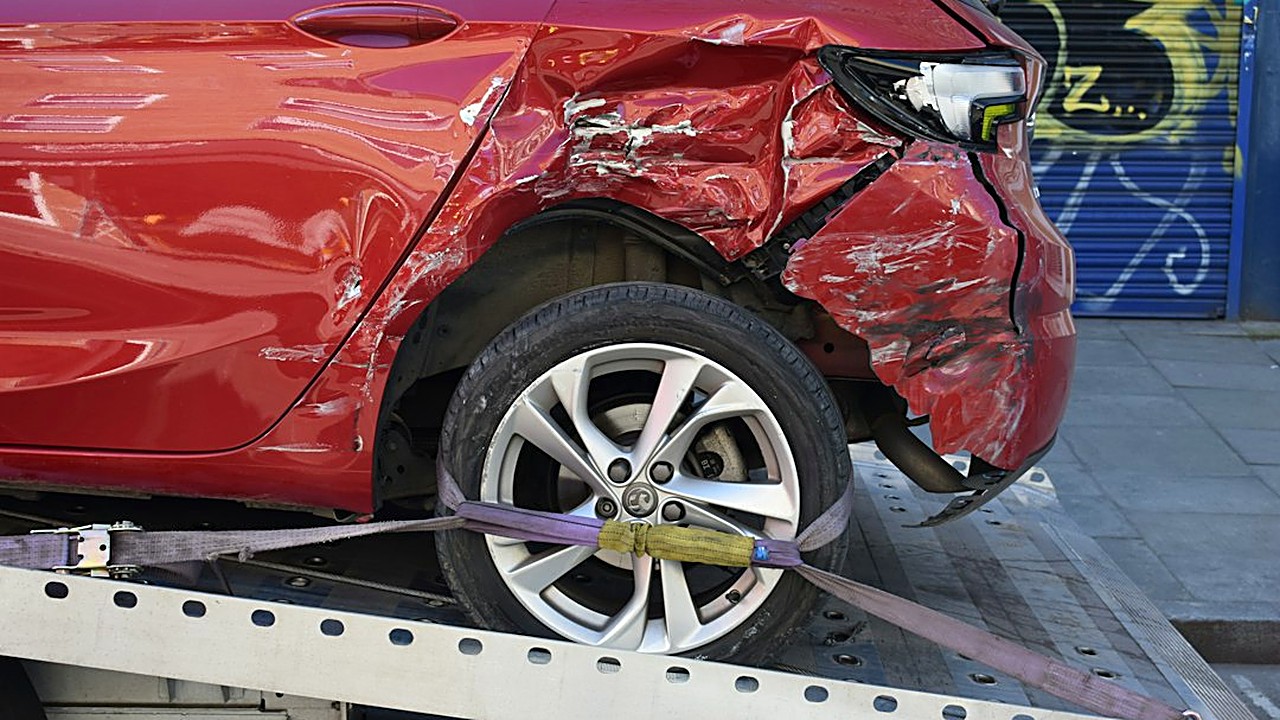
Quick answer: After a collision, your deductible only applies to repairs on your own car under collision coverage: you pay it first and the insurer pays the rest. If the other driver was at fault, their liability insurance should pay and you usually owe no deductible. Your deductible never applies to damage or injuries you cause to others.↗ Share on X
After a collision, your auto insurance deductible only applies to damage to your own car under collision coverage. It is the amount you pay first; your insurer pays the rest of the covered repair, up to the car's value. If the other driver caused the crash, their liability insurance should pay for your car, and you usually pay no deductible at all. Your deductible never applies to damage or injuries you cause to other people — that is paid by your liability coverage.
That is the short answer. The rest of this article shows you exactly how the money moves in each situation, so you know what to expect before you call your insurer.
What does a deductible actually mean in dollars?
 Auto Insurance Declarations Page: Decode It Line by Line →
 Car Insurance After a Lapse: How Insurers Price Your Risk →
 Will One Claim Raise Your Insurance Rates? What Changes →
A deductible is the part of a claim you pay out of pocket. The insurer subtracts it from the amount it owes you.
Here is a simple example with round numbers:
- Repair estimate for your car: $4,200
- Your collision deductible: $500
- Insurer pays the body shop: $3,700
- You pay the body shop: $500
You do not "send" the deductible to the insurance company. You pay it to the repair shop, or the insurer subtracts it from the check it sends you.
The deductible applies per claim, not per year. Two separate accidents in one year usually means paying the deductible twice. This is different from most health insurance plans, which use a yearly deductible.
Clear money tips in your inbox. No hype.
Which parts of your policy use the deductible after a crash?
Affiliate link. We may earn a commission on purchases, at no extra cost to you.
This content is informational and is not investment advice or financial consulting.
An auto policy is really a bundle of different coverages. Each one has its own rules. This table shows which ones usually carry a deductible after a collision:
| Coverage | What it pays for | Do you pay a deductible? |
|---|---|---|
| Liability (bodily injury) | Injuries you cause to other people | No |
| Liability (property damage) | Other people's cars and property you damage | No |
| Collision | Damage to your own car from hitting a car or object | Yes |
| Comprehensive | Theft, hail, fire, flood, hitting an animal | Yes, a separate deductible |
| Uninsured motorist property damage | Your car, when the at-fault driver has no insurance | Sometimes, depends on your state |
| Personal injury protection (PIP) | Your medical bills, in no-fault states | Sometimes, depends on your state and plan |
| Medical payments (MedPay) | Your and your passengers' medical bills | Usually no |
| Rental reimbursement | A rental car while yours is repaired | No, but there is a daily and total limit |
The key point: one accident can touch several coverages, and only some of them use your deductible. Look at your declarations page — the one- or two-page summary at the front of your policy. It lists each coverage and the deductible next to it.
What happens if the crash was your fault?
 Premiums vs. Out-of-Pocket Costs: What You Actually Pay →
 Life Insurance With Several Beneficiaries: Who Gets What →
 Does Deployment Change Your Life Insurance? What to Check →
If you caused the accident, here is the usual order of events:
1. Your liability coverage pays the other driver. Their car repairs and their medical bills come out of your liability limits. You pay no deductible for this part.
2. Your collision coverage pays for your car. You pay your collision deductible, and the insurer pays the rest.
3. Your medical coverage (PIP or MedPay) pays your medical bills, if you carry it.
One warning: if the other driver's costs go above your liability limits, you can be held responsible for the difference. That is a limit problem, not a deductible problem, but it surprises many people. If you are unsure whether your limits are high enough, ask a licensed insurance agent to review them.
If you do not have collision coverage (common on older, paid-off cars), your insurer will not pay to fix your own car at all. Many people learn this only after a crash.
What happens if the other driver was at fault?
You have two main paths.
Path 1: File with the other driver's insurance. This is called a third-party claim. Their property damage liability pays for your repairs. You pay no deductible. The downside: their insurer may take longer to accept fault, and you may wait for repairs.
Path 2: File with your own insurer under collision. You pay your deductible up front, and your car gets fixed faster. Then your insurer goes after the other driver's insurer to get its money back. This process is called subrogation (your insurer "steps into your shoes" to collect).
If subrogation succeeds, your insurer usually sends your deductible back to you. If fault is split — say you were partly to blame — you may only get part of it back. Recovering the money can take weeks or months.
Which path to pick?
- Choose Path 1 if fault is clear and you can wait.
- Choose Path 2 if fault is disputed, the other insurer is slow, or you need your car back quickly.
What if the at-fault driver has no insurance?
This is where uninsured motorist property damage (UMPD) coverage matters. Depending on your state, it may have its own small deductible, or none. Some states waive the deductible if you can identify the uninsured driver.
If you do not carry UMPD, you can still use your collision coverage, but you will pay your collision deductible and may not get it back.
Hit-and-run cases vary a lot by state. Some states let UMPD cover them; others require you to use collision. Call your insurer and ask exactly which coverage applies before you assume.
What if your car is totaled?
When repairs would cost close to or more than the car is worth, the insurer declares it a total loss. In that case:
1. The insurer figures out the car's actual cash value — what it was worth right before the crash, based on age, mileage, condition and local sales.
2. It subtracts your deductible.
3. It pays you the difference (or pays your lender first, if you have a loan).
Example: actual cash value $11,000, deductible $1,000, payout $10,000.
If you owe more on your loan than the car is worth, the payout may not cover the loan. Gap insurance covers that difference. Some gap policies also cover your deductible; many do not. Check the wording.
When should you skip filing a claim?
If the repair estimate is close to your deductible, filing may not make sense.
- Repair estimate $650, deductible $500: the insurer pays only $150.
- A claim may still go on your record and could affect your future price at renewal.
A practical rule many drivers use: get a written estimate first. If the amount above your deductible is small, think hard before filing. But always report an accident to your insurer if anyone was hurt or another person's property was damaged, even if you plan to pay for your own car yourself. Your policy likely requires prompt notice, and a late report can cause problems if the other person files a claim later.
Should you raise your deductible to lower your premium?
A higher deductible usually lowers your premium, because you take on more of the small losses. Whether it is a good trade depends on one question: could you pay the deductible tomorrow without borrowing?
Use this simple check:
1. Look at your current deductible and premium.
2. Ask your insurer for a quote with a higher deductible (for example, going from $500 to $1,000).
3. Write down the yearly savings.
4. Divide the extra deductible by the yearly savings. If you raise it by $500 and save $100 a year, it takes five claim-free years to break even.
5. Make sure the full new deductible is sitting in your emergency fund.
If a $1,000 surprise would put you on a credit card, a lower deductible is often the safer choice, even if it costs a bit more each month.
Also remember: your lender may set a maximum deductible if your car is financed or leased. Check your loan or lease contract before raising it.
What should you do in the first 48 hours after a collision?
1. Make sure everyone is safe and call 911 if anyone is hurt.
2. Exchange information: names, phone numbers, insurance company and policy numbers, license plates.
3. Take photos of both cars, the scene, road signs and any injuries.
4. Get a police report number if officers come to the scene.
5. Call your insurer and ask three questions: which coverage applies, what deductible applies, and whether you are better off filing with the other driver's insurer.
6. Get a written repair estimate before agreeing to any work.
7. Keep every receipt — towing, rental, medical — and write down every call with the date and the name of the person you spoke to.
Your next step
Open your policy today and find the declarations page. Write down three numbers: your collision deductible, your comprehensive deductible, and whether you have uninsured motorist property damage coverage. Then check your savings account. If you could not pay your collision deductible from savings right now, start setting aside a small amount each payday until you can. If anything on the page is unclear, call your agent or insurer and ask them to walk you through it — that call is free and takes ten minutes.
FAQ
Do I pay a deductible if the accident was not my fault?
Usually not, if you file with the at-fault driver's insurance. If you file with your own collision coverage instead, you pay the deductible first, and your insurer tries to recover it from the other insurer through subrogation and refunds you if it succeeds.
Is the auto deductible per accident or per year?
Per claim. Two separate accidents in the same year usually mean paying the deductible twice, unlike most health plans, which use a yearly deductible.
Does my deductible apply if my car is totaled?
Yes. The insurer pays the car's actual cash value minus your deductible. Gap insurance may cover what you still owe on a loan, but many gap policies do not cover the deductible.
Do I pay a deductible for the other driver's damage?
No. Damage and injuries you cause to other people are paid by your liability coverage, which has no deductible. You only need to worry if the costs go above your liability limits.
Clear money tips in your inbox. No hype.
Educational content, not personalized financial advice. Sources cited where applicable.