Car Insurance After a Lapse: How Insurers Price Your Risk


Quick answer: Insurers see a coverage gap as higher risk, so they usually charge more when you return. The price depends mostly on how long the gap lasted, why it happened, your driving record and, in most states, your credit-based insurance score. Short gaps cost less, proof of a good reason can help, and the penalty fades as you rebuild continuous coverage.↗ Share on X
Insurers treat a gap in car insurance as a sign of higher risk, so they usually charge more when you come back. They look at how long the gap lasted, why it happened, your driving record and, in most states, your credit-based insurance score. A short gap of a few days often costs little or nothing extra. A gap of several months, or one that came with a license suspension, can push you into a higher price tier or even a high-risk (nonstandard) company. The good news: you can explain the gap, shop around, and rebuild a "continuous coverage" record over time.
Below is how the math works in plain words, what each factor means, and what you can do this week to lower your quote.
What counts as a "lapse" in coverage?
 Life Insurance Risk Classes: How Underwriters Set Your Rate →
 High vs. Low Deductible for Teen Drivers: The Smart Choice →
 Lower Your Car Insurance Deductible and Keep Premiums Flat →
A lapse is any period when you owned or regularly drove a car without an active auto insurance policy. It can happen in a few ways:
- you missed a payment and the insurer canceled the policy;
- you let the policy end at renewal and did not start a new one the same day;
- you sold your car and did not buy insurance until your next car;
- you moved, were deployed, or lived without a car for a while.
Insurers ask about this on the application. Most will ask something like "Have you had continuous insurance for the last six months?" or "When did your last policy end?" Many also check databases that show past policies. So it is better to answer honestly. A wrong answer can lead to a denied claim or a canceled policy later.
Clear money tips in your inbox. No hype.
Why do insurers see a gap as risk?
Affiliate link. We may earn a commission on purchases, at no extra cost to you.
This content is informational and is not investment advice or financial consulting.
Insurance pricing is based on groups of drivers who look alike on paper. Companies study their own claims data and see which traits are linked to more or bigger claims. Many insurers have found that drivers with a recent gap file claims more often than drivers who stayed insured.
That does not mean *you* are a worse driver. It means you were placed in a group that, on average, costs the company more. The insurer cannot see your habits on day one, so it uses your history as a stand-in.
There is also a practical reason. If you drove without insurance, the company has no record of how you drove during that time. Less information means more uncertainty, and uncertainty gets priced in.
The 6 factors that shape your price after a lapse
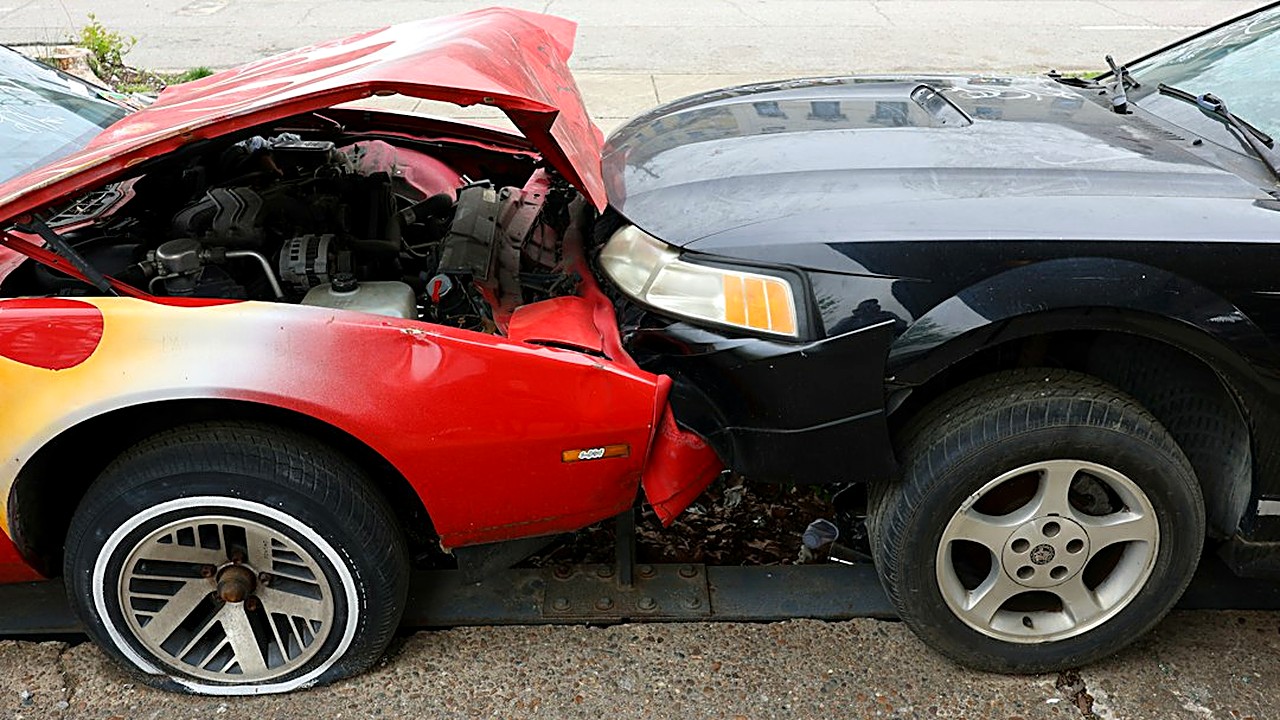 Not-at-Fault Accident Claim: Will Your Car Insurance Rise? →
 Life Insurance Riders: Which Add-Ons Are Worth Paying For? →
 Life Insurance Medical Exam: What to Expect Step-by-Step →
| Factor | What the insurer looks at | Why it matters |
|---|---|---|
| Length of the gap | Days, weeks or months without coverage | Short gaps are usually treated more gently than long ones |
| Reason for the gap | Military service, no car, hospital stay, missed payment | Some reasons may qualify for an exception if you can prove them |
| Driving record | Tickets, at-fault accidents, DUI in the last 3 to 5 years | A gap plus violations stacks the risk |
| License status | Was your license suspended for driving uninsured? | May require an SR-22 filing, which limits your options |
| Credit-based insurance score | Payment history, debt levels (where state law allows) | Used in most states; banned or limited in some |
| Car and location | Model, ZIP code, how far you drive | Same as for any driver, but they add up with the gap |
1. Length of the gap
This is usually the biggest single factor. Many insurers sort applicants into buckets, for example:
1. no gap (continuous coverage);
2. a short gap, often up to about 30 days;
3. a medium gap of one to six months;
4. a long gap of more than six months.
Each company sets its own cutoffs, so these numbers are only an example of how the sorting works. Ask the agent which bucket you fall in.
2. The reason for the gap
Some insurers do not penalize a gap if there was a good reason and you can show proof. Common examples:
- active military duty (bring your deployment orders);
- you did not own a car and did not drive (a bill of sale showing when you sold the old car helps);
- you were covered on someone else's policy, like a parent's or spouse's (ask for a letter from that insurer);
- long hospital stay or living abroad.
Not every company offers these exceptions, and the rules differ by state. But it costs nothing to ask.
3. Your driving record
A gap alone may raise your price a little. A gap plus a recent at-fault accident or a speeding ticket can raise it a lot, because the insurer sees two warning signs at once. Get a copy of your driving record from your state's motor vehicle agency so you know what the insurer will see.
4. License suspension and SR-22
In many states, driving without insurance can lead to a fine, a suspended license or a suspended registration. To get your license back, a court or the state may require an SR-22. An SR-22 is not insurance. It is a form your insurer files with the state to prove you carry at least the minimum coverage. If you need one, some standard insurers may decline you, and you may need a company that writes high-risk policies. You often must keep the SR-22 for a set number of years.
5. Credit-based insurance score
In most states, insurers can use a score built from your credit report. It is not the same as your regular credit score, but it uses similar data. California, Hawaii and Massachusetts do not allow credit to be used for auto insurance pricing, and some other states limit how it can be used. If your state allows it, paying bills on time helps your insurance price as well as your credit.
6. Car and location
These factors are not about the gap, but they add up. An expensive car to repair, a ZIP code with many claims, or a long daily commute will raise the price for anyone. With a lapse, they stack on top.
How much more will I pay?
There is no single number. Each insurer files its own rates with the state, and the extra charge for a lapse can be small at one company and large at another. That is exactly why comparing quotes matters more for you than for a driver with a clean history. The difference between the cheapest and most expensive quote can be big.
What you can count on:
- the longer the gap, the higher the likely increase;
- the penalty usually fades as you build a new record of continuous coverage;
- many insurers look at your history over the last six months to a few years, so the effect is not permanent.
Step by step: how to get the best price after a lapse
1. Get coverage as soon as possible. Every extra day without insurance can make the gap look worse. Even a basic state-minimum policy starts your new record.
2. Gather proof of the reason. Deployment orders, a bill of sale, a letter from another insurer, or hospital records. Keep copies ready.
3. Pull your driving record. Know what is on it before you call.
4. Get at least three to five quotes. Include a large national company, a regional company and an independent agent who can check several companies at once.
5. Ask every company the same questions: "How do you treat a gap of my length?" and "Do you have an exception for my reason?"
6. Ask about discounts you still qualify for: paying in full, automatic payments, a safe-driving app, bundling with renters or home insurance, a defensive driving course.
7. Consider a higher deductible. The deductible is the amount you pay before insurance pays on a claim. A higher deductible lowers your premium, but only choose one you could actually pay if you had a claim tomorrow.
8. Set a reminder at six months. Once you have six months of continuous coverage, get new quotes. Many companies price you better at that point.
How do I avoid another lapse?
- Use automatic payments so a forgotten bill does not cancel your policy.
- Never cancel the old policy until the new one is active. Overlap by a day if needed.
- Selling your car with no plan to buy soon? Ask about a non-owner policy. It covers you when you drive cars you do not own and keeps your history continuous, often at a lower price than a regular policy.
- Read every notice from your insurer. Companies usually send a warning before canceling for nonpayment. Acting on that notice can save your record.
When should I talk to a professional?
Talk to a licensed insurance agent or broker if you need an SR-22, if several companies have declined you, or if you are not sure what your state requires. If you received a fine or a court notice for driving uninsured, contact your state's motor vehicle agency or a lawyer to understand your obligations. Your state's department of insurance can also answer questions and take complaints about how a company treated you. This article explains how pricing generally works; it is not personal financial or legal advice.
Your next step today
Write down three facts on one sheet of paper: the exact date your last policy ended, the reason for the gap, and any tickets or accidents in the last three years. Then call or go online to get quotes from at least three companies, and read them the same facts each time. Pick the best offer that meets your state's minimum, set up automatic payment, and put a reminder on your phone for six months from today to shop again.
FAQ
Does a short lapse in car insurance raise my rate?
Often only a little or not at all. Many insurers treat gaps of up to about 30 days more gently than longer ones, but each company sets its own rules, so ask how they treat your exact gap.
Can I avoid a lapse penalty if I did not own a car?
Some insurers offer exceptions if you can prove you did not own or drive a car, were on active military duty, or were covered on someone else's policy. Bring documents such as a bill of sale or deployment orders.
What is an SR-22 and do I need one after a lapse?
An SR-22 is a form your insurer files with the state to prove you carry minimum coverage. It is usually required only if your license was suspended, for example for driving uninsured. A licensed agent can confirm whether you need one.
How long does a coverage gap affect my insurance price?
The effect usually fades as you build a new record of continuous coverage. Many insurers price you better after six months, so get new quotes at that point.
Clear money tips in your inbox. No hype.
Educational content, not personalized financial advice. Sources cited where applicable.