Zero-Based Envelope Budget for Bills That Change Every Month

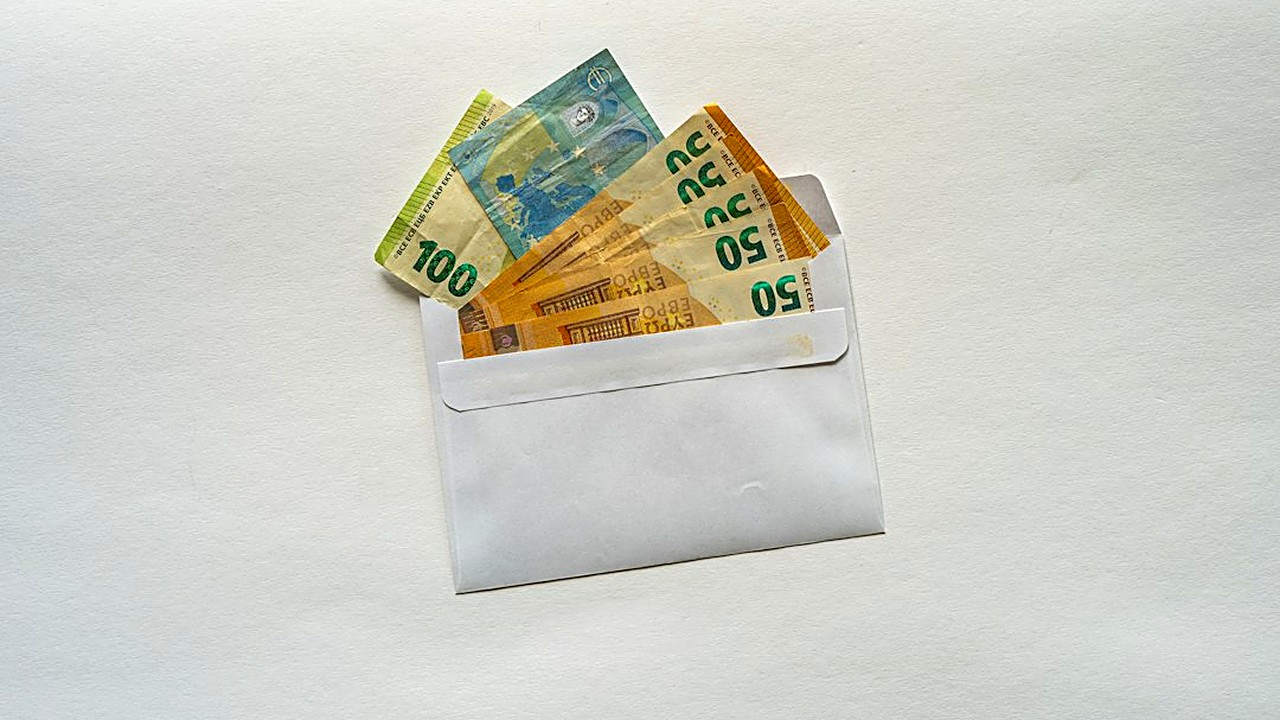
Quick answer: Give every dollar of your monthly income a job until you reach zero, and put each variable expense, like groceries, gas or utilities, in its own envelope. Fund each envelope with the average of your last three months plus a small buffer. When an envelope runs out, move money from another envelope instead of borrowing, and adjust the amounts next month.↗ Share on X
To budget for variable expenses with the zero-based envelope method, give every dollar of your monthly income a job until nothing is left unassigned, and put each changing cost, like groceries, gas or the electric bill, into its own "envelope" with a set amount. Set that amount from the average of your last three months plus a small buffer. When an envelope is empty, you either stop spending in that category or move money from another envelope. You never borrow from a credit card to cover the gap.
"Zero-based" does not mean you have zero dollars in the bank. It means income minus everything you planned equals zero, because every dollar has a place, including savings.
What counts as a variable expense?
 Build an Emergency Fund Fast Without a New Bank Account →
 How to Find Hidden Annual Fees on Your Bank Statement →
 How to Pay a Surprise Tax Bill Without Your Emergency Fund →
A variable expense is a cost that happens often but changes in amount. Fixed expenses stay the same every month.
| Fixed (same each month) | Variable (changes each month) | Irregular (not every month) |
|---|---|---|
| Rent or mortgage | Groceries | Car registration |
| Car payment | Gas | Holiday gifts |
| Phone plan | Electricity and heating | Annual subscriptions |
| Insurance premium | Eating out | School supplies |
| Loan payments | Household supplies | Car repairs |
Variable and irregular costs are the ones that break most budgets. The envelope method is built to handle both.
Clear money tips in your inbox. No hype.
How does the envelope method work?
Affiliate link. We may earn a commission on purchases, at no extra cost to you.
This content is informational and is not investment advice or financial consulting.
The original version used real paper envelopes filled with cash. You put $400 in the "Groceries" envelope at the start of the month. When it is empty, grocery spending stops until next month.
Today, many people do the same thing digitally:
- Separate savings accounts (many banks let you open several and name them)
- A budgeting app that tracks envelopes for you
- A simple spreadsheet with a column for each envelope
Cash still works well for categories where people tend to overspend, like eating out. Seeing the money leave your hand makes you think twice.
Step-by-step: how do you set it up?
 3-Month Emergency Fund on a Tight Budget: A Realistic Plan →
 Split Your Emergency Fund Across 3 Accounts the Safe Way →
 Rent Just Went Up? How to Keep Saving Without Going Broke →
Follow these seven steps the first time. It usually takes one evening.
1. Write down your monthly take-home pay. Use what actually arrives in your account. If your income changes, use the lowest month from the last three to six months.
2. Pull the last three months of bank and card statements. Mark every purchase with a category.
3. List your fixed expenses and their exact amounts.
4. Average each variable category. Add the three months and divide by three. Groceries of $380, $450 and $410 average to $413.
5. Add a buffer to each variable envelope. A buffer of 5% to 10% covers normal swings. $413 plus 10% is about $455.
6. Create sinking-fund envelopes for irregular costs. A sinking fund is money you set aside a little at a time for a known future cost. If car registration is $240 a year, put $20 a month in that envelope.
7. Assign the rest until you hit zero. Whatever is left goes to savings goals, extra debt payments or an emergency fund.
What does a sample zero-based budget look like?
Here is an example for a household that takes home $4,200 a month. Your numbers will be different, but the shape is the same.
| Envelope | Type | Amount |
|---|---|---|
| Rent | Fixed | $1,450 |
| Car payment | Fixed | $320 |
| Insurance (car and renters) | Fixed | $185 |
| Phone and internet | Fixed | $130 |
| Groceries | Variable | $560 |
| Gas | Variable | $180 |
| Electricity and heating | Variable | $150 |
| Household supplies | Variable | $60 |
| Eating out | Variable | $120 |
| Car repairs and registration | Sinking fund | $80 |
| Gifts and holidays | Sinking fund | $60 |
| Medical copays | Sinking fund | $50 |
| Emergency fund | Savings | $300 |
| Extra debt payment | Debt | $455 |
| Fun money | Personal | $100 |
| Total | $4,200 | |
| Income minus budget | $0 |
Every dollar has a job. If income is $4,200 and the plan adds up to $4,200, the budget is zero-based.
How do you handle bills that swing a lot, like utilities?
Utility bills can double between summer and winter. Two simple fixes:
- Ask your utility about budget billing. Many power and gas companies offer a plan that spreads your yearly cost into equal monthly payments. This turns a variable bill into a fixed one.
- Use a "high month" average. Look at your last 12 bills, take the average, and fund the envelope with that amount every month. In cheap months, the extra stays in the envelope. In expensive months, you use what built up.
What do you do when an envelope runs out?
This will happen, especially in the first two or three months. That is normal, not failure. Here is the order to follow:
1. Pause spending in that category if you can. Eat from the pantry for a few days.
2. Move money from a lower-priority envelope. Take $30 from "Eating out" to cover "Groceries." Write down the move.
3. Use the buffer category if you have one, like a small "Miscellaneous" envelope.
4. Only touch the emergency fund for real emergencies, like a car that will not start, not for an expensive grocery trip.
The key rule: do not cover the gap with a credit card. That just moves the problem into next month with interest added.
What about money left over in an envelope?
You have two good choices:
- Roll it over. Leave it in the envelope. A grocery envelope with $40 left can absorb next month's higher bill. This works best for categories that swing.
- Sweep it. Move it to savings or debt. This works best for categories you are trying to shrink, like eating out.
Pick one rule per envelope and stick to it, so you do not have to decide every month.
How do you budget when your income also changes?
If you are paid hourly, work on tips or freelance, the method still works with one change: budget from last month's income, not this month's guess.
1. Keep a holding envelope where all income lands.
2. At the end of the month, count what came in.
3. Next month, budget only that amount, from zero.
Getting to this point takes time. Many people start by saving one month of expenses in the holding envelope, a little at a time, before switching fully.
What mistakes make the envelope method fail?
- Setting amounts from hope instead of history. If you spent $600 on groceries for three months, a $350 envelope will fail. Start with reality, then trim slowly.
- Forgetting irregular costs. Birthdays and car repairs are not surprises. They are just not monthly.
- Too many envelopes. Thirty categories become a chore. Ten to fifteen is enough for most homes.
- Not checking in during the month. A five-minute check each week stops overspending before it grows.
- Quitting after one bad month. The first month is a test. The second is better. By the third, most numbers settle.
When should you get outside help?
If you cannot cover your fixed bills even before variable ones, or your debt payments take most of your income, a budget alone may not be enough. A nonprofit credit counselor can review your situation and explain options like a debt management plan. In the U.S., look for agencies that are members of the National Foundation for Credit Counseling (NFCC). This article is general education, not personal financial advice.
Your next step
Tonight, download your last three months of bank and card statements. Pick your three biggest variable categories, usually groceries, gas and eating out, and find the three-month average for each. Add 10%, and open a separate envelope for each one, using cash, a bank sub-account or a free spreadsheet. Fund them on your next payday, and set a weekly five-minute reminder on your phone to check what is left.
FAQ
Does zero-based budgeting mean I spend all my money?
No. It means every dollar gets a job, and savings, debt payments and emergency funds are jobs too. Income minus the plan equals zero, but much of that plan can be money you keep.
How much should I put in a variable expense envelope?
Start with the average of your last three months in that category and add a buffer of 5% to 10%. Adjust after each month based on what you actually spent.
Is it better to use cash or a bank account for envelopes?
Both work. Cash helps with categories where you tend to overspend, like eating out. Bank sub-accounts or an app are easier for bills you pay online.
What if my income changes every month?
Budget from last month's income instead of guessing this month's. Keep a holding envelope where income lands, and build a one-month cushion over time.
Clear money tips in your inbox. No hype.
Educational content, not personalized financial advice. Sources cited where applicable.