High vs. Low Deductible for Teen Drivers: The Smart Choice


Quick answer: Choose a low deductible if you have a strong savings buffer and want to avoid large out-of-pocket costs in a crash. Choose a high deductible if you need lower monthly premiums and can comfortably cover a larger bill if an accident happens.↗ Share on X
The Short Answer: Which One Should You Pick?
 Lower Your Car Insurance Deductible and Keep Premiums Flat →
 Not-at-Fault Accident Claim: Will Your Car Insurance Rise? →
 Life Insurance Riders: Which Add-Ons Are Worth Paying For? →
You should choose a low deductible if you have at least $1,000 to $2,000 in emergency savings and want to keep your out-of-pocket costs low after a crash. You should choose a high deductible if your monthly budget is tight and you can comfortably pay a larger sum (like $1,000 or more) if you need to file a claim. For most teen drivers, the math usually favors a high deductible to keep monthly premiums down, but only if you have the cash ready for a potential accident.
Teens are statistically more likely to be in accidents than older drivers. This means your insurance policy is not just a formality; it is a financial safety net. The deductible is the amount you pay out of your pocket before your insurance company starts paying. The rest of this guide breaks down exactly how to choose the right balance between monthly costs and risk.
Clear money tips in your inbox. No hype.
What Is a Deductible in Simple Terms?
Affiliate link. We may earn a commission on purchases, at no extra cost to you.
This content is informational and is not investment advice or financial consulting.
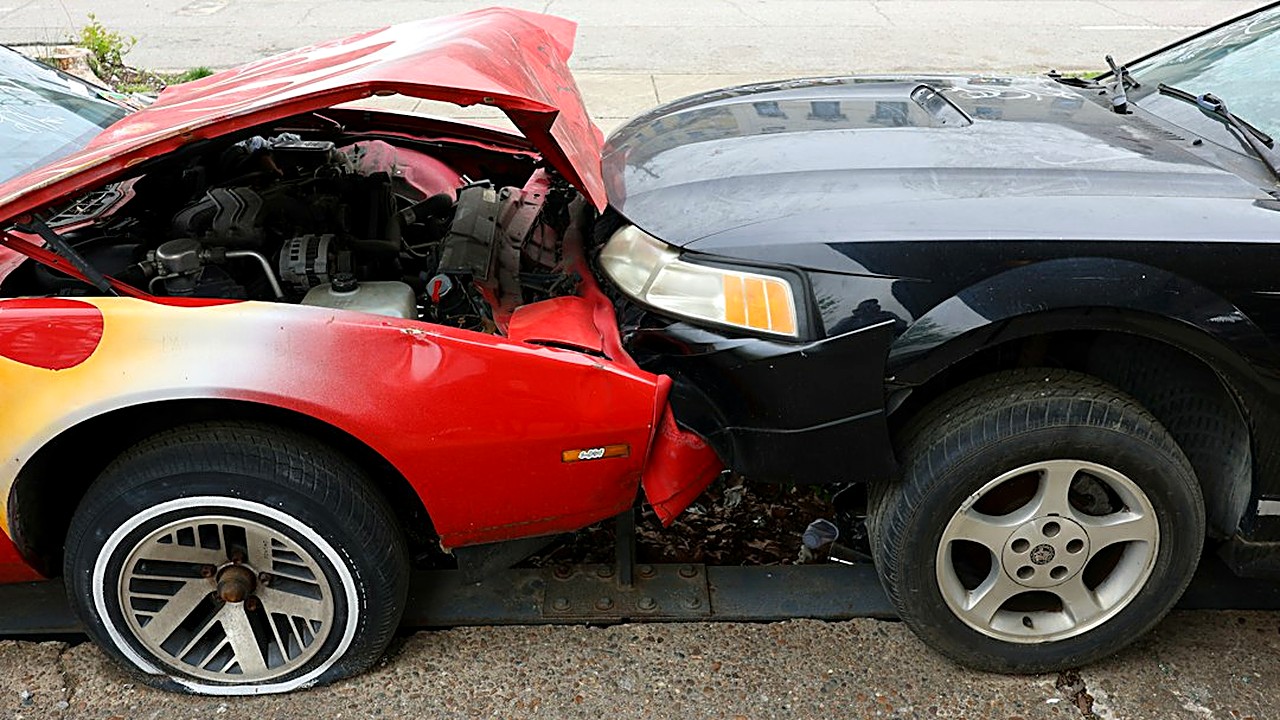
A deductible is your share of the cost. Think of it as a threshold. If you hit a pole and the repair costs $3,000, and your deductible is $500, you pay the first $500. Your insurance company pays the remaining $2,500. If the repair costs only $400, you pay the full $400 because you did not reach the $500 threshold. Insurance does not pay anything in that case.
This concept is central to how insurance works. You are trading a small, predictable monthly cost (the premium) for protection against a large, unpredictable event (a major crash). The deductible is the lever you pull to change that trade-off.
Why Teens Are a Special Case
 Life Insurance Medical Exam: What to Expect Step-by-Step →
 $500 or $1,000 Deductible? Comparing Car Insurance Quotes →
 Insurance Exclusions: What Your Policy Won't Pay For →
Teen drivers are a high-risk group. They have less experience, less focus, and more distractions. Because of this, insurers charge higher premiums for them. When you add a teen to your policy, your rates jump. The deductible choice directly impacts how high that jump is.
If you pick a low deductible, the insurer takes on more risk. They know that if a crash happens, they will start paying sooner. To cover that risk, they charge you more every month. If you pick a high deductible, the insurer takes on less risk. You are absorbing the first chunk of the cost. In exchange, your monthly bill goes down.
The Math: Low vs. High Deductible
Let’s look at concrete numbers to see how this works in practice. These are estimates based on typical market rates. Your specific numbers will vary by state, driving record, and vehicle value.
| Deductible Option | Monthly Premium (Est.) | Cost if You File a Claim ($3,000 Damage) | Total Annual Cost (No Claim) | Total Annual Cost (One Claim) |
|---|---|---|---|---|
| Low ($250) | $180 | $250 (You) + $2,750 (Insurer) | $2,160 | $2,410 |
| Medium ($500) | $150 | $500 (You) + $2,500 (Insurer) | $1,800 | $2,300 |
| High ($1,000) | $120 | $1,000 (You) + $2,000 (Insurer) | $1,440 | $2,440 |
*Note: These numbers are illustrative. Always get three quotes from different companies to see your actual rates.*
Look at the "Total Annual Cost (One Claim)" column. In this example, the low deductible actually costs more if you have an accident. Why? Because you paid higher premiums all year, and then you still had to pay a deductible. The high deductible had a lower yearly cost, but the out-of-pocket cost at the time of the crash was higher.
The key question is: Can you pay the deductible immediately?
If you choose the $1,000 deductible and get in a crash, you need $1,000 in cash the next day. If you do not have it, you are in trouble. If you choose the $250 deductible, you only need $250. That is a much smaller burden.
Step-by-Step: How to Decide
Follow these five steps to make the right choice for your family.
1. Check Your Emergency Fund. How much cash do you have in a checking or savings account that you can access quickly? If you have less than $1,000, do not choose a high deductible. You might not be able to pay the bill when it comes due. A low deductible is safer for your cash flow.
2. Value Your Car. If your teen is driving a brand-new car worth $30,000, a low deductible makes sense. You want to protect that asset. If they are driving a ten-year-old car worth $5,000, a high deductible might be better. If the car is totaled, the insurance payout will be the car’s value. You do not want to pay high premiums to insure a cheap car. In fact, if the car is worth very little, you might consider dropping comprehensive and collision coverage entirely and driving without full coverage. This is a big decision, so talk to an agent.
3. Look at Your State’s Laws. Some states require certain types of coverage. In no-fault states, your own insurance pays for your injuries regardless of who caused the crash. This can make the deductible less critical for minor fender benders. In at-fault states, you rely on the other driver’s insurance. If they are uninsured, your coverage kicks in. A lower deductible helps here because you are less dependent on the other party’s insurance company paying you quickly.
4. Consider the Teen’s Driving History. If your teen has a clean record, you have more leverage to negotiate rates. If they have tickets or a prior accident, your premiums are already high. A high deductible might be the only way to keep the monthly bill affordable. However, if they are a new driver with a clean record, you might find that the difference in premiums between a low and high deductible is small. In that case, choose the low deductible for peace of mind.
5. Calculate the Break-Even Point. Ask your agent: "How many accidents would I need to have in a year for the low deductible to be cheaper than the high deductible?" Usually, the answer is one or two. If your teen is a cautious driver, the high deductible is likely the better financial bet. If they are a risk-taker, the low deductible protects you from frequent small claims.
Common Mistakes to Avoid
Mistake 1: Choosing the highest deductible to save money.
Some parents pick a $2,500 deductible to save $20 a month. This is a dangerous game. If a crash happens, you owe $2,500 on top of any other expenses. If you do not have that cash, you might have to take out a loan or use a credit card with high interest. The savings on the premium are not worth the financial stress of a large bill.
Mistake 2: Ignoring the vehicle’s value.
If your teen’s car is worth $4,000, and you have a $2,500 deductible, the insurance company will only pay $1,500 if the car is totaled. You are paying for coverage that barely covers the loss. In this case, a high deductible or no collision coverage might be smarter. Always compare the deductible to the car’s actual cash value.
Mistake 3: Assuming the deductible is the same for all coverage types.
Your policy usually has separate deductibles for collision and comprehensive. You might have a $500 deductible for collision (crashes with other cars) and a $250 deductible for comprehensive (theft, hail, animals). Make sure you understand which deductible applies to which situation. A deer hitting the car is a comprehensive claim. Hitting a tree is a collision claim.
How Insurance Works for Teens: A Quick Refresher
It is important to understand how insurance works in general. When you buy auto insurance, you are buying a contract. You pay the insurer a premium. In return, they agree to pay for certain losses up to a limit. The deductible is your share. The limit is the maximum they will pay. For teens, the limits should be high enough to cover serious injuries or damage to other people’s property. Do not lower your liability limits to save money. If your teen causes a serious accident, low limits can leave you personally liable for the rest of the damages. This is a legal and financial risk that should not be taken lightly.
When to Call a Professional
If you are unsure about the best coverage, talk to a licensed insurance agent. They can look at your specific state laws, your teen’s driving record, and your car’s value to give you personalized advice. Do not rely on generic online quotes alone. An agent can explain the fine print and help you avoid gaps in coverage. If you have health issues or other financial complexities, a financial advisor can also help you decide how much risk you can afford to take with your insurance deductibles.
Final Thoughts: Your Next Step
Do not guess. Get three quotes from different insurance companies. Ask each one for the price with a $500 deductible and a $1,000 deductible. Write down the numbers. Look at your bank account. If you have $1,000 in savings, the $1,000 deductible is likely your best bet. If you have $500, stick with the $500 or $250 deductible. The goal is not to find the cheapest quote. The goal is to find the policy that you can afford to pay if something goes wrong. Protect your family’s finances by making this decision with clear eyes and real numbers.
FAQ
Is a high deductible always cheaper for teen drivers?
Usually, yes. A high deductible lowers your monthly premium. However, it increases the amount you pay out of pocket if you have an accident. It is only cheaper in the long run if you do not file many claims.
What is a good deductible amount for a new teen driver?
A common choice is $500 or $1,000. If you have limited savings, $500 is safer. If you have a strong emergency fund, $1,000 can save you money on monthly premiums.
Does the deductible apply if someone else hits my teen’s car?
If the other driver is at fault and has insurance, you usually do not pay your deductible. You file a claim with their insurance company. You only pay your deductible if you use your own policy, such as when the other driver is uninsured or if you are at fault.
Clear money tips in your inbox. No hype.
Educational content, not personalized financial advice. Sources cited where applicable.